Rabbi Jacob Meir in Wartime Salonika
French soldiers present arms as Rabbi Jacob Meir, Grand Rabbi (chief rabbi) of Salonika, leaves Allied headquarters in November 1918.
French army film, Salonika, November 1918. Preserved by ECPAD (French army film archives). The player starts where Rabbi Meir leaves through the gate.
Through the honor guard
Near the end of the reel, a white-bearded Sephardic rav in dark clothes walks out of Allied headquarters with Greek Orthodox clergy, and French soldiers present arms as they pass. It is November 1918 in Salonika (today’s Thessaloniki). World War I is ending in the Balkans: Bulgaria has already quit the fight, and French, British, and other Allied armies still run the city from a headquarters under General Louis Franchet d’Espèrey.
French army cameramen film that reception: officers, guests, traffic at the gate. The rav leaving through the guard is Rabbi Jacob Meir, Grand Rabbi of Salonika, representing the city’s large Sephardic community to the occupying powers.
A city under fire and occupation
By the time these cameras roll, that community is already living in a scarred city. The Great Fire of 1917 had burned much of the Jewish quarter, and Allied armies still ran the streets.
From 1908 to 1919 Rabbi Meir held the Salonika rabbinate through the Balkan Wars, that fire, and years of occupation. French cameras filmed him again and again: he was the man they dealt with when they needed the Jewish community at a public event.
Rabbi Meir was born in Jerusalem in 1856, and the November 1918 gate is one stop in a longer wartime paper trail of receptions, holidays, and a French decoration.
Earlier reels: the same rav, 1916
The November 1918 gate scene is the last of a short wartime series. Two years earlier, under the previous Allied commander, General Maurice Sarrail, French film already treated Rabbi Meir as a regular guest.
New Year, 1 January 1916. At Sarrail’s New Year gathering the film names the Grand Rabbi, then shows him outdoors near a greenhouse, greeting civilians.
French army film, Salonika, 1 January 1916. Preserved by ECPAD.
The same rav appears again that spring, now leaving a Salonika shul.
Passover, April 1916. The cameras shift from headquarters to a Salonika shul. Rabbi Meir walks out on Yom Tov, and the courtyard behind him fills with the crowd leaving davening.
French army film, Salonika, April 1916. Preserved by ECPAD.
By midsummer the cameras have him back at Sarrail’s door.
Bastille Day, 14 July 1916. France’s national holiday. Rabbi Meir arrives at Sarrail’s residence with the French consul and the French colony in Salonika. The film follows him up the stairs with the other guests, then watches the party leave.
French army film, Salonika, 14 July 1916. Preserved by ECPAD.
That November they film him once more, this time at a church thanksgiving.
8 November 1916. Four years after Greek troops took Salonika, cameras film a Te Deum (a church thanksgiving service) at Saint-Dimitri church. Eleftherios Venizelos, Greece’s prime minister, arrives, and then the film names the next guest: the Grand Rabbi. Rabbi Meir comes down the path in a dark robe, white beard forward, as soldiers present arms.
French army film, Salonika, 8 November 1916. Preserved by ECPAD.
Chevalier of the Légion d’honneur
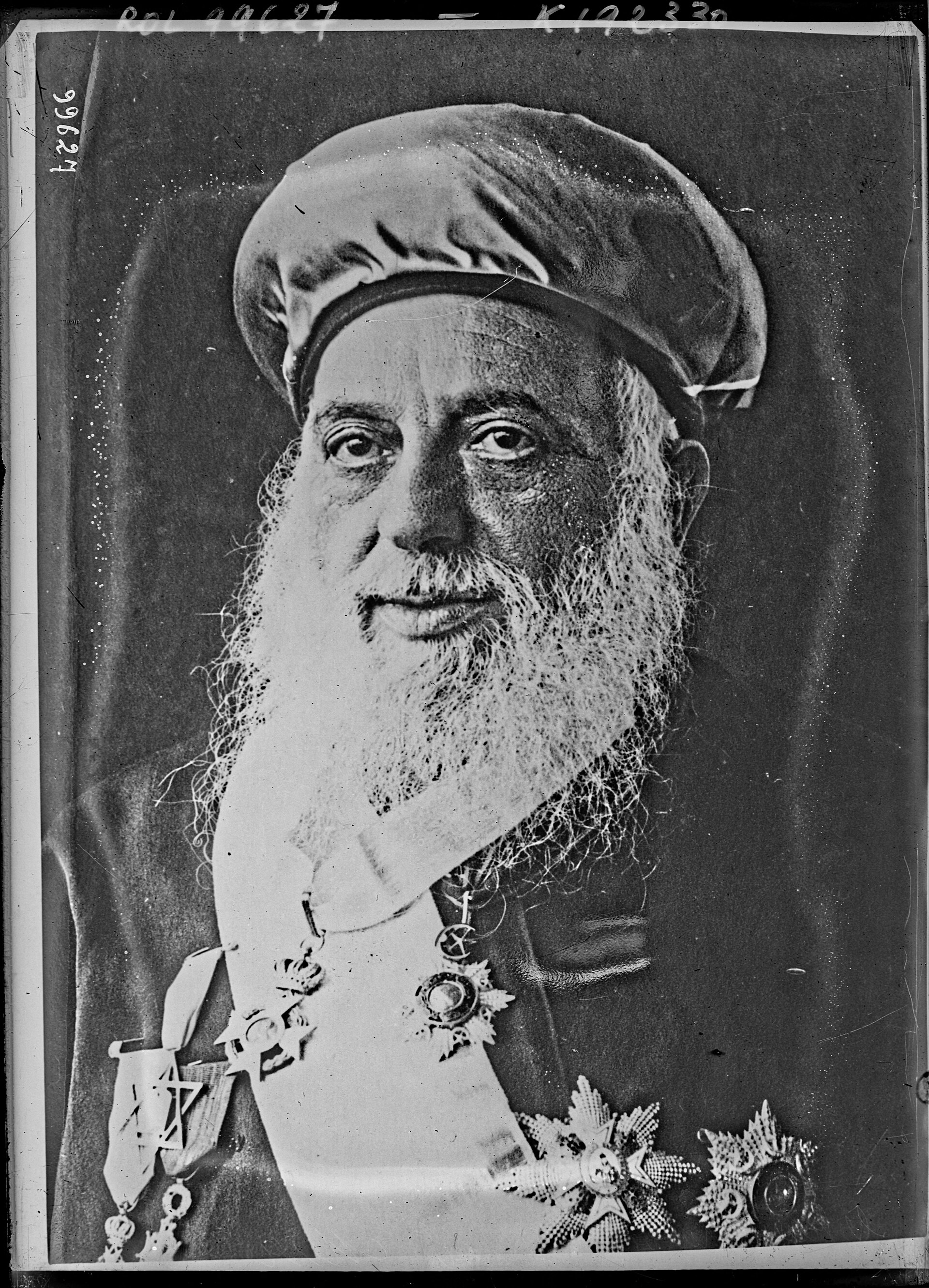
In June 1918 Franchet d’Espèrey took over Allied command at Salonika. On 23 June, at the general’s residence, he pinned on Rabbi Meir the rank of Chevalier of the Légion d’honneur (a French knighthood). Still photographers caught the arrival, the pinning of the medal, the embrace afterward, and other public moments that year. The stills below are those June ceremonies. The November film shows the same rav leaving through the honor guard, weeks after Bulgaria’s surrender at Salonika.
Word of the honor reached Paris a few weeks later. On 19 July 1918 Paris’s Jewish weekly L’Univers israélite ran a short piece headed “Le grand-rabbin de Salonique et le général Guillaumat” (“The Grand Rabbi of Salonika and General Guillaumat”). It named Rabbi Jacob Meir, Grand Rabbi of Salonika, as chevalier de la Légion d’honneur, and printed the two letters that went with the decoration.
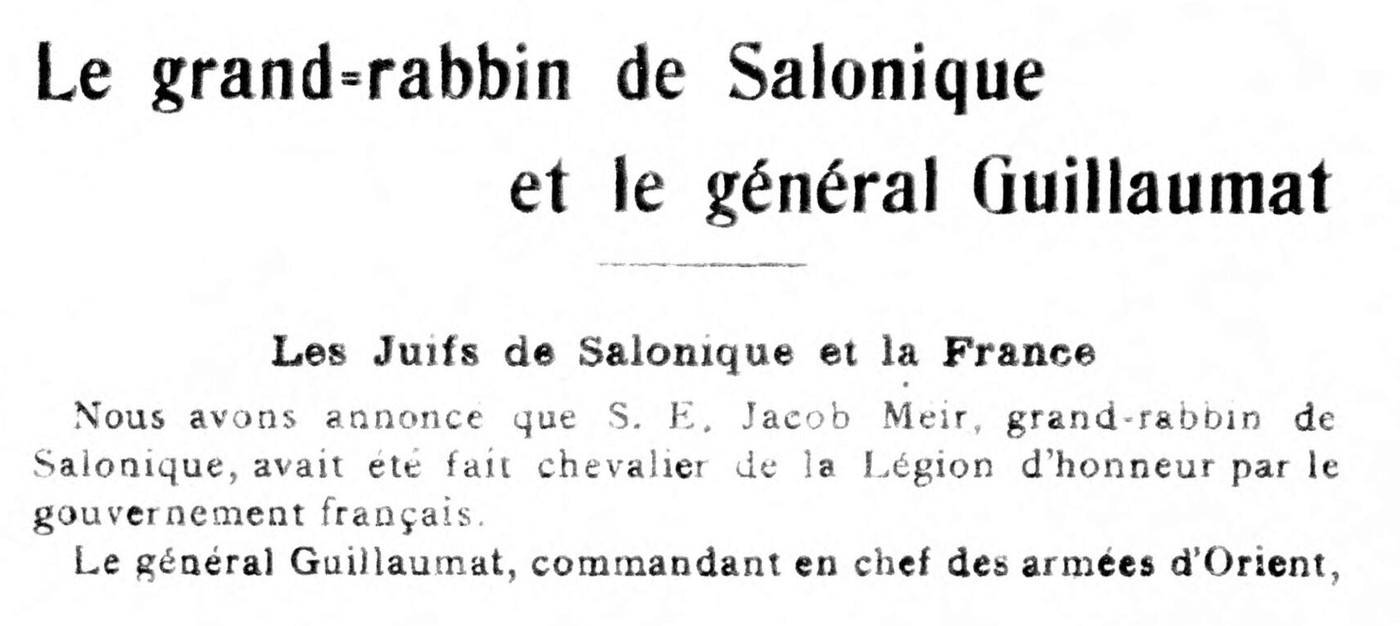
The first letter is from General Guillaumat, who had held the Salonika command before Franchet. On his proposal, he writes, the Republic conferred the croix de chevalier. He thanks Rabbi Meir for standing with the Allies and with France, and for moral aid to French Jewish soldiers. He adds that he will soon have the honor of presenting the decoration himself.
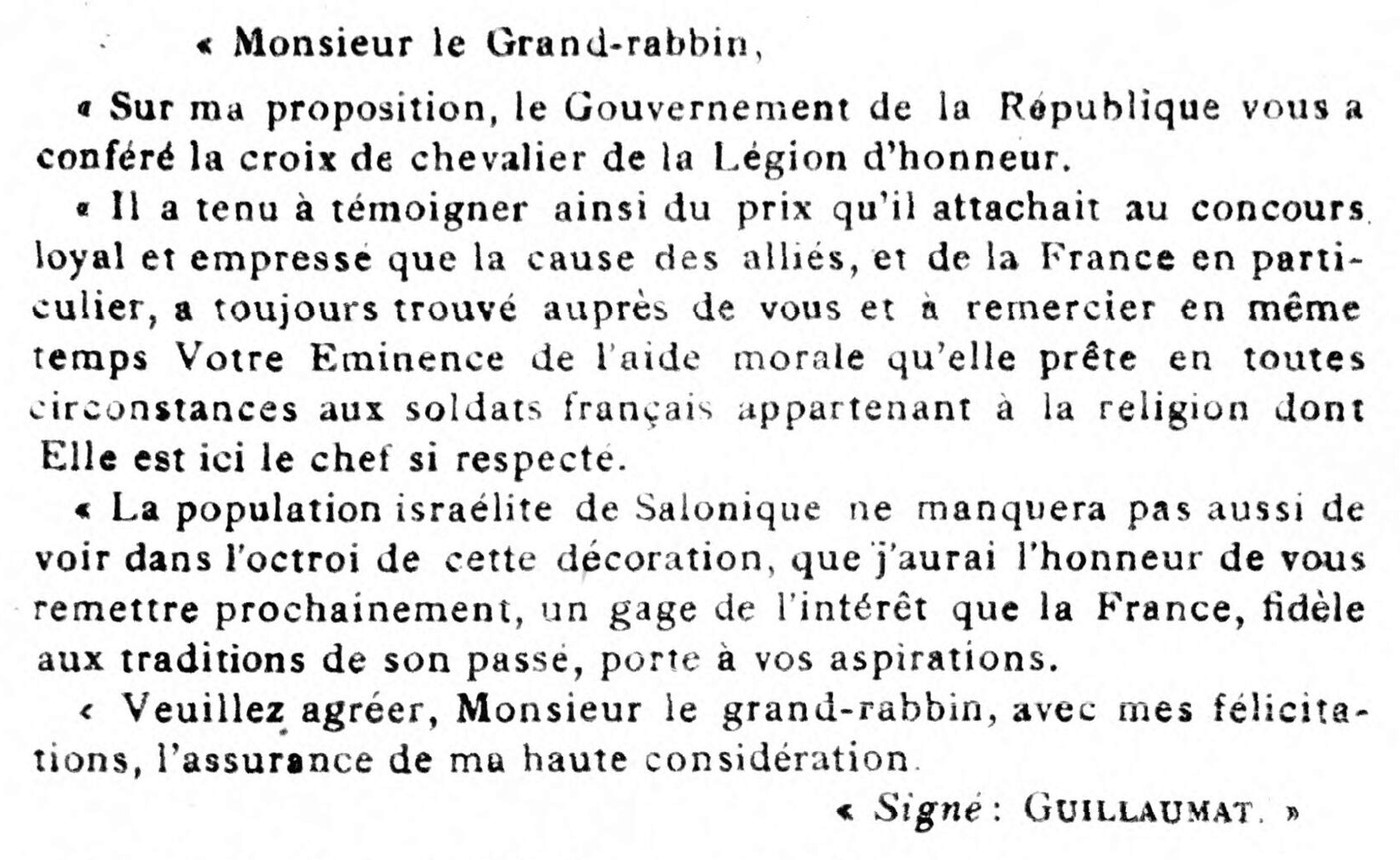
From Guillaumat’s letter in the same issue:
“Grand Rabbi,
“On my proposal, the Government of the Republic has conferred on you the cross of Chevalier of the Légion d’honneur.
“It wished thereby to show how much it valued the loyal and eager support that the Allied cause, and France in particular, has always found with you, and at the same time to thank Your Eminence for the moral aid you give in every circumstance to the French soldiers belonging to the religion of which you are here the so respected head.
“The Jewish population of Salonika will also not fail to see, in the grant of this decoration, which I shall have the honor of presenting to you shortly, a pledge of the interest that France, faithful to the traditions of its past, takes in your aspirations.
“Please accept, Grand Rabbi, with my congratulations, the assurance of my high consideration.
“Signed: GUILLAUMAT.”
Rabbi Meir answered for Salonika’s Jews. The honor, he wrote, was theirs as much as his. France was the community’s language of instruction and the source of its ideas. He thanked the Republic as the first emancipator of the Jews, and said the Allied coalition could be trusted with Jewish aspirations. He signed it J. MEIR.
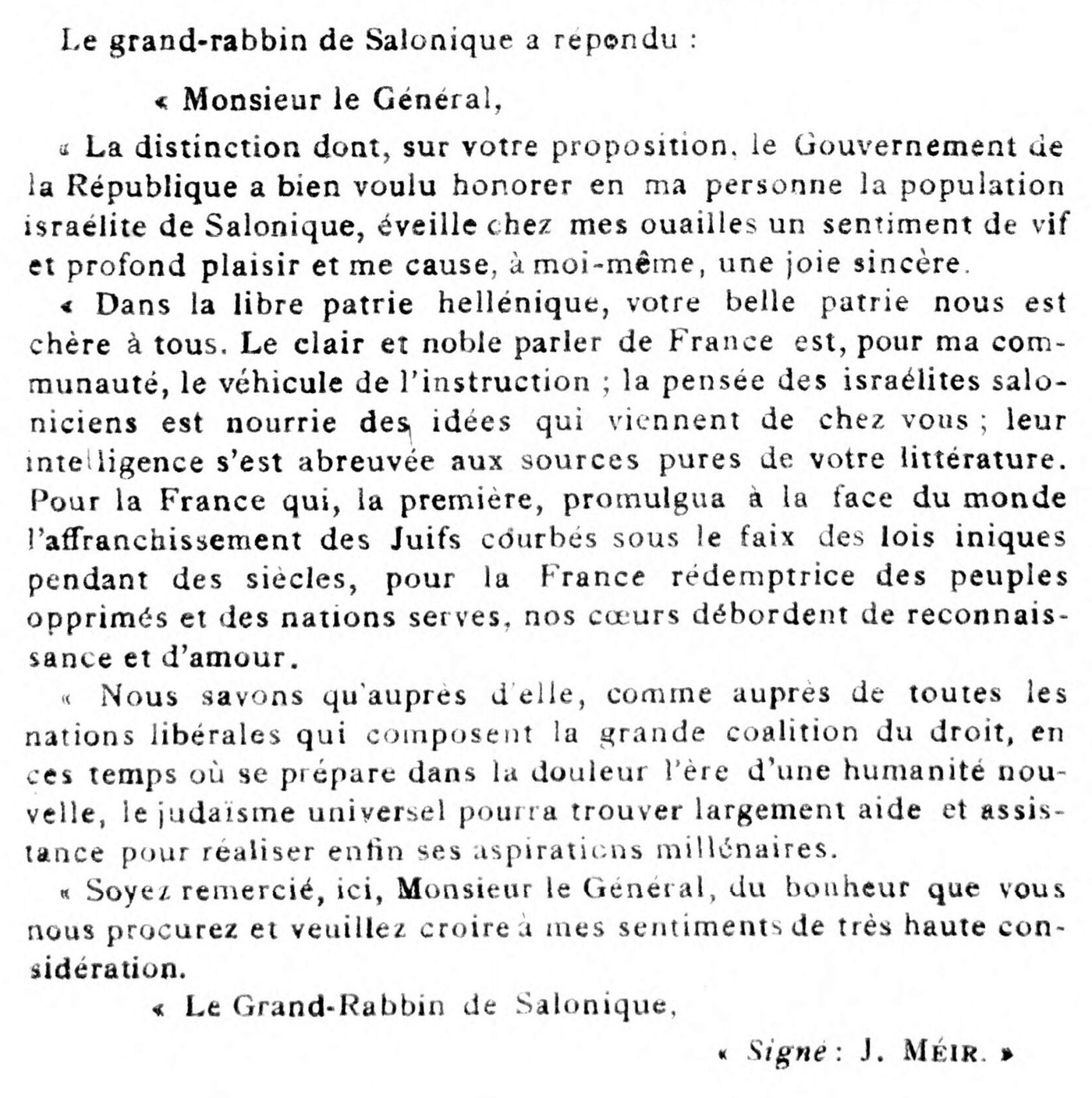
Rabbi Meir’s reply, same issue:
“General,
“The distinction with which, on your proposal, the Government of the Republic has been pleased to honor, in my person, the Jewish population of Salonika awakens in my flock a feeling of keen and deep pleasure and gives me, myself, a sincere joy.
“In the free Hellenic homeland, your beautiful country is dear to us all. The clear and noble speech of France is, for my community, the vehicle of instruction; the thought of Salonika’s Jews is nourished by the ideas that come from you; their minds have drunk at the pure sources of your literature. For France, which was the first to proclaim before the world the emancipation of the Jews bowed for centuries under unjust laws, for France the redeemer of oppressed peoples and subject nations, our hearts overflow with gratitude and love.
“We know that with her, as with all the liberal nations that make up the great coalition of right, in these times when a new era of humanity is being prepared in pain, universal Judaism will find ample help and assistance at last to realize its age-old aspirations.
“Be thanked here, General, for the happiness you procure for us, and believe in my sentiments of very high consideration.
“The Grand Rabbi of Salonika,
“Signed: J. MEIR.”
Guillaumat’s letter still speaks of presenting the cross “shortly.” By the time L’Univers israélite printed it, the army photographs already showed Franchet pinning the medal at the residence on 23 June.
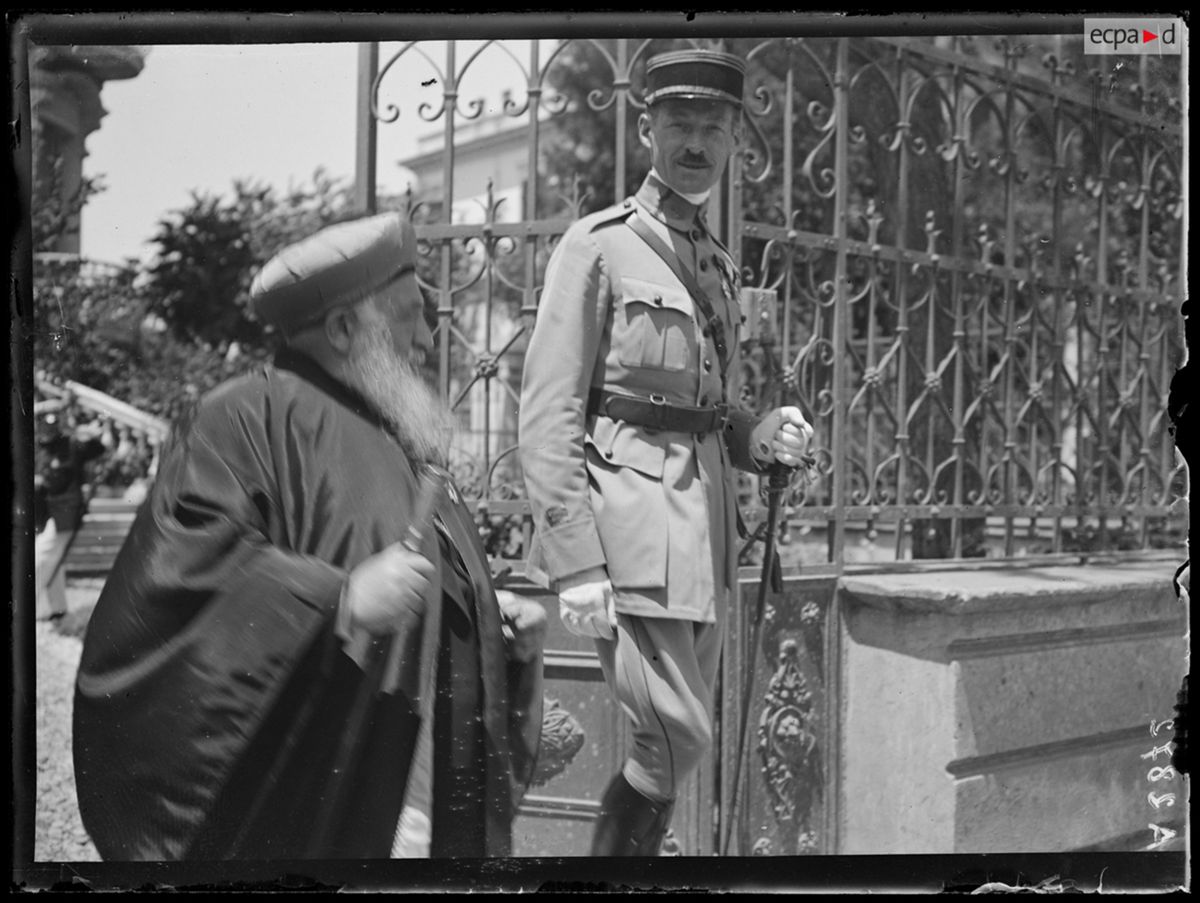
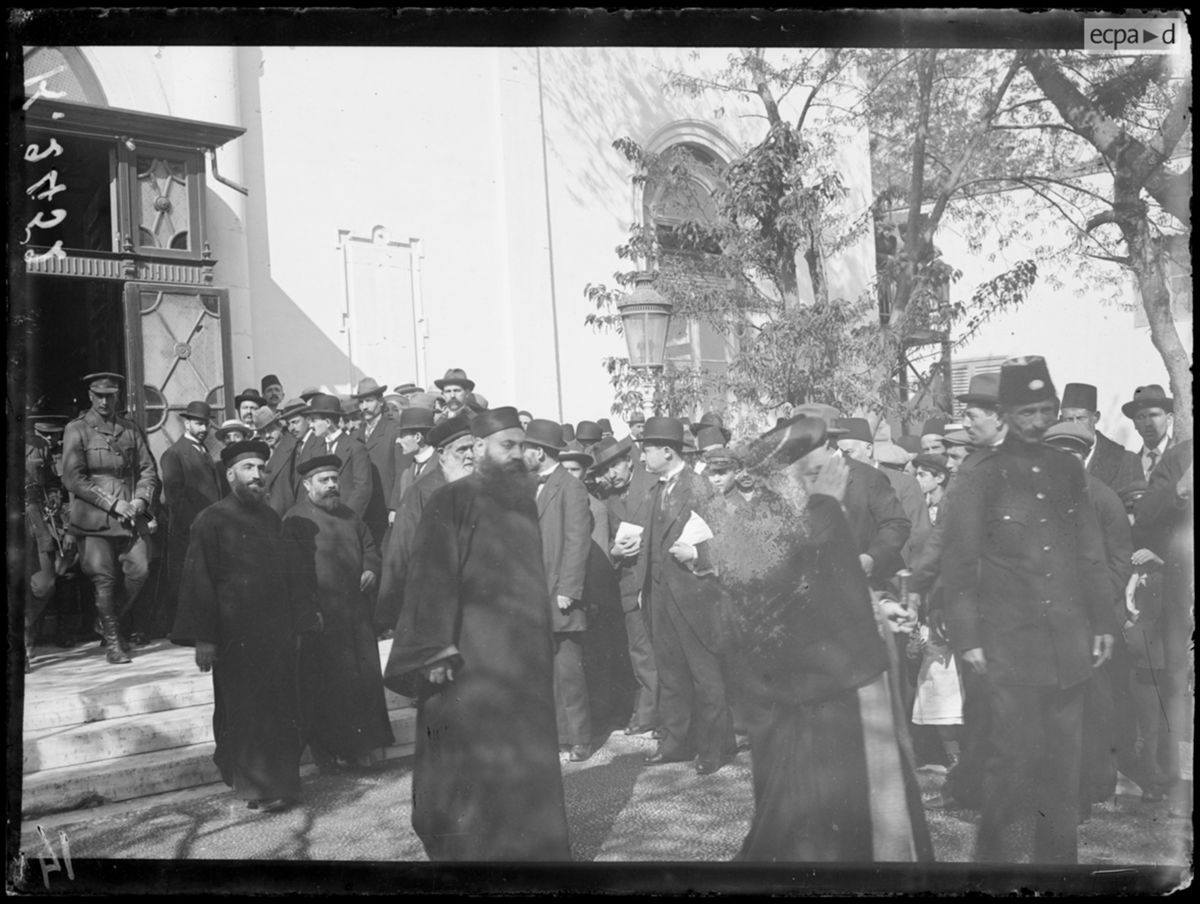
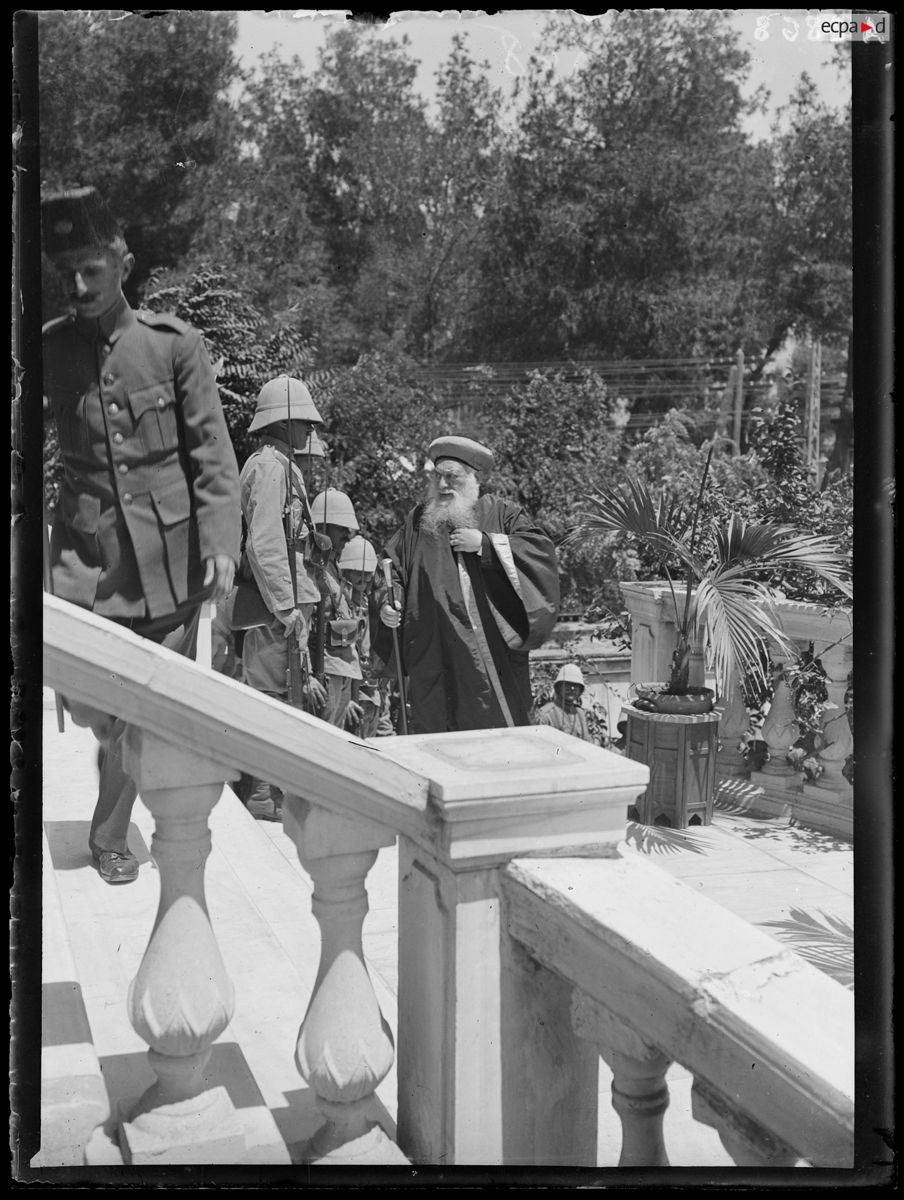
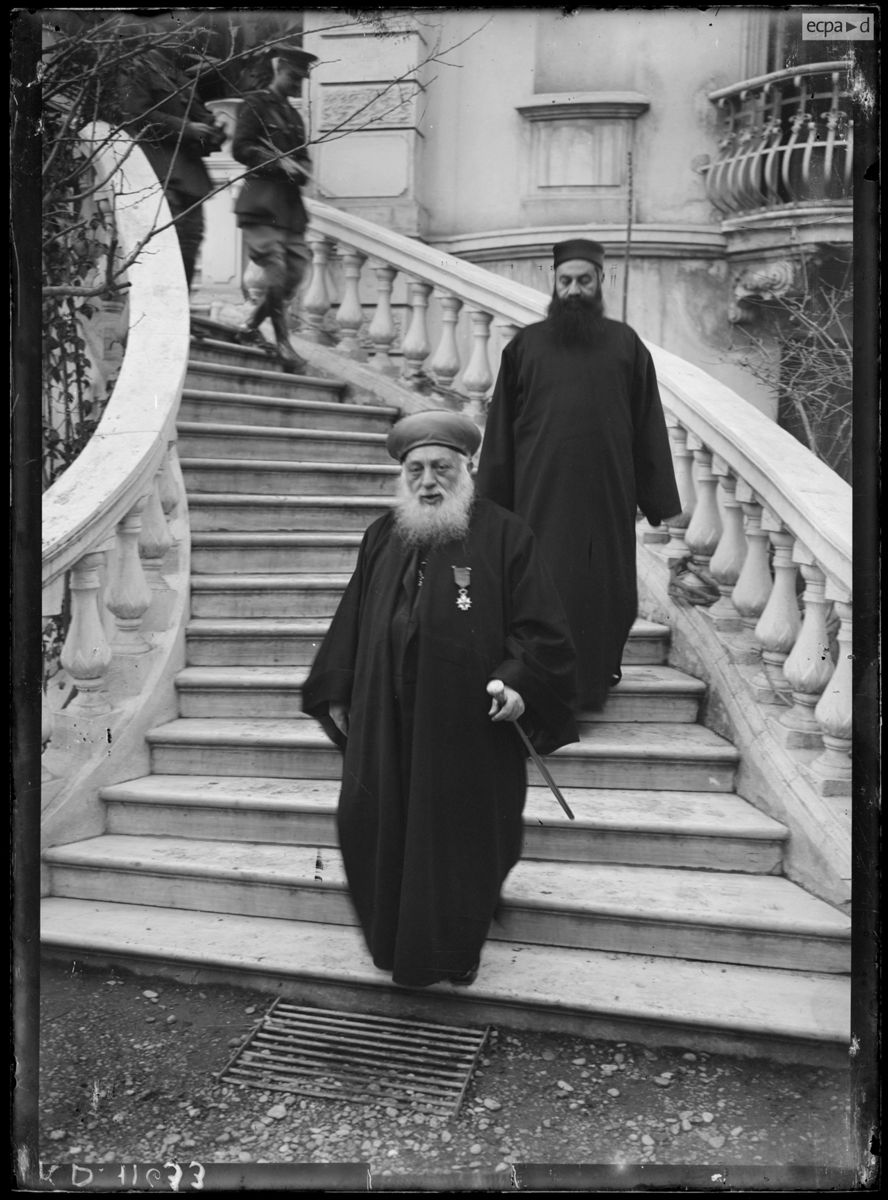
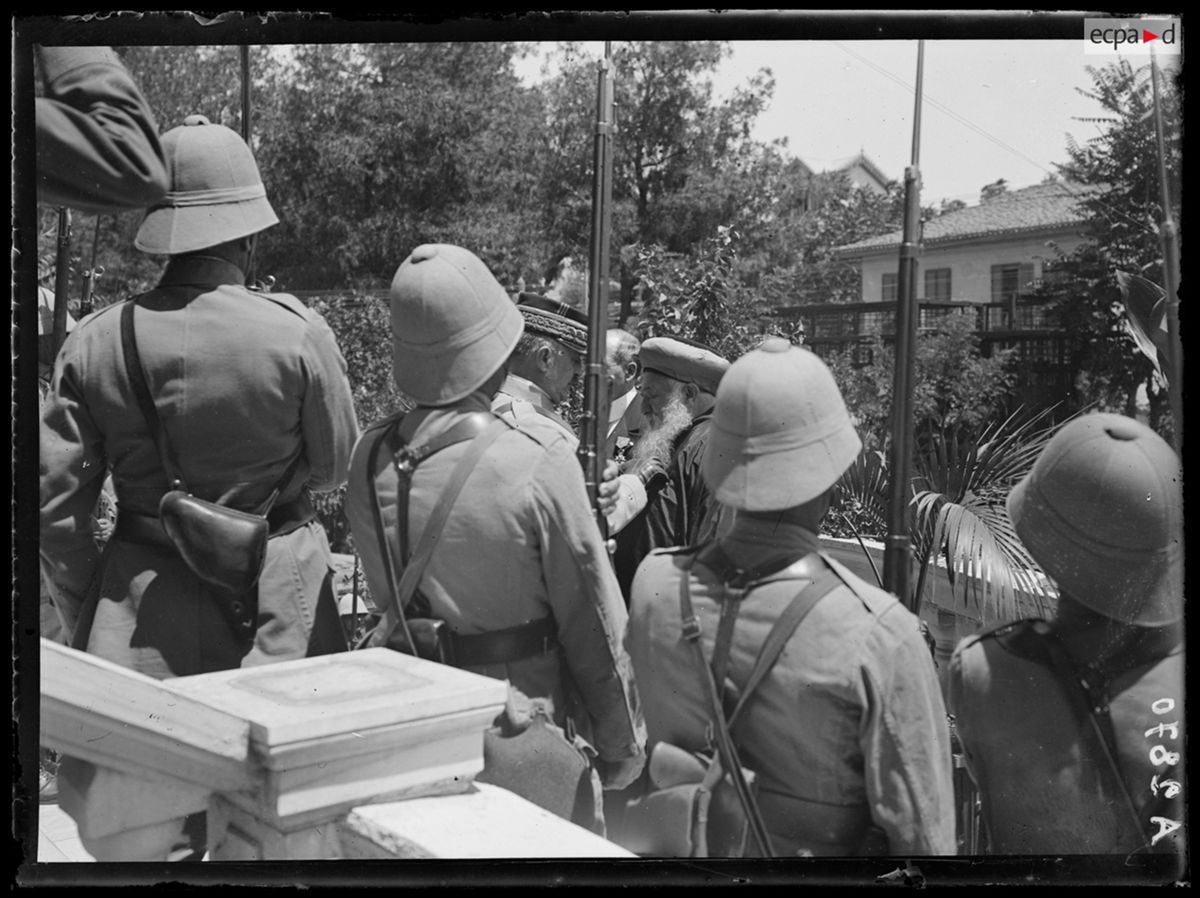
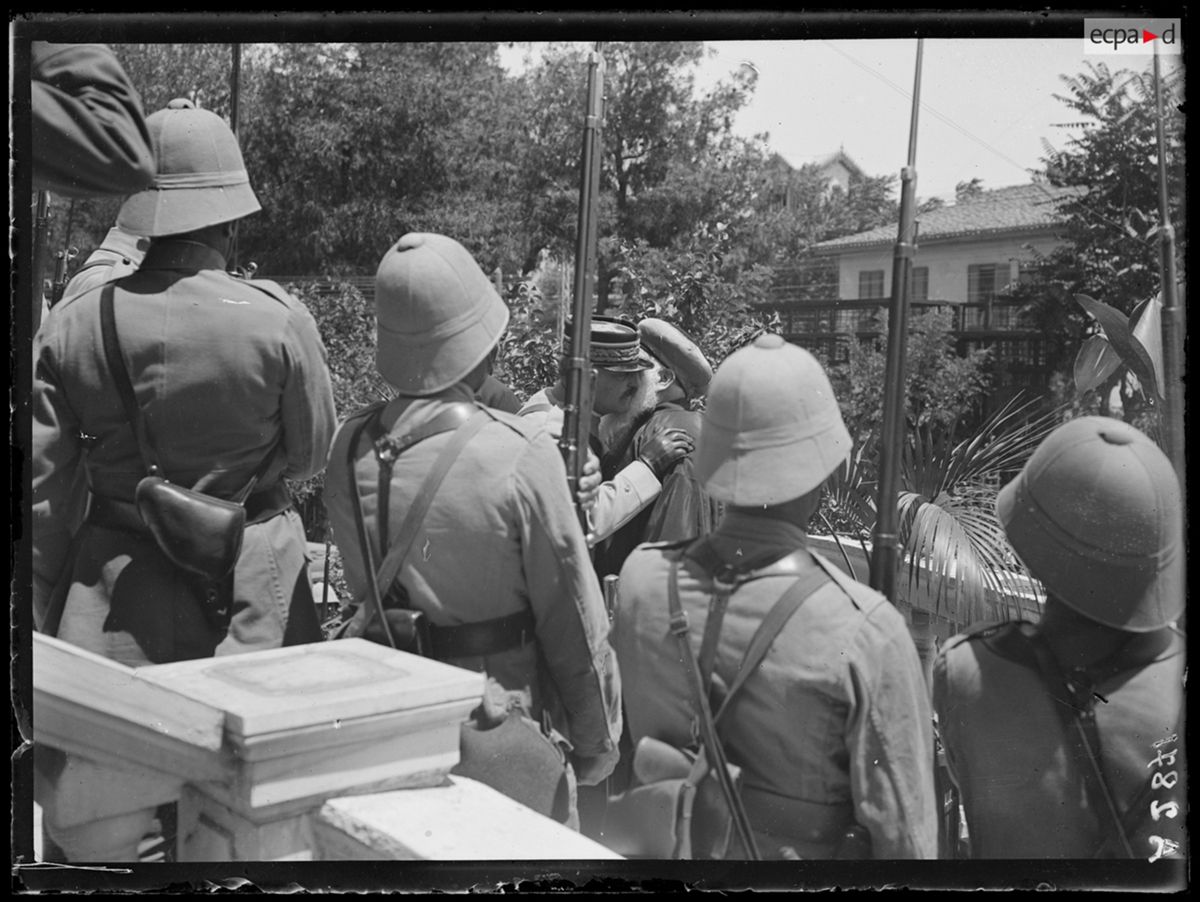
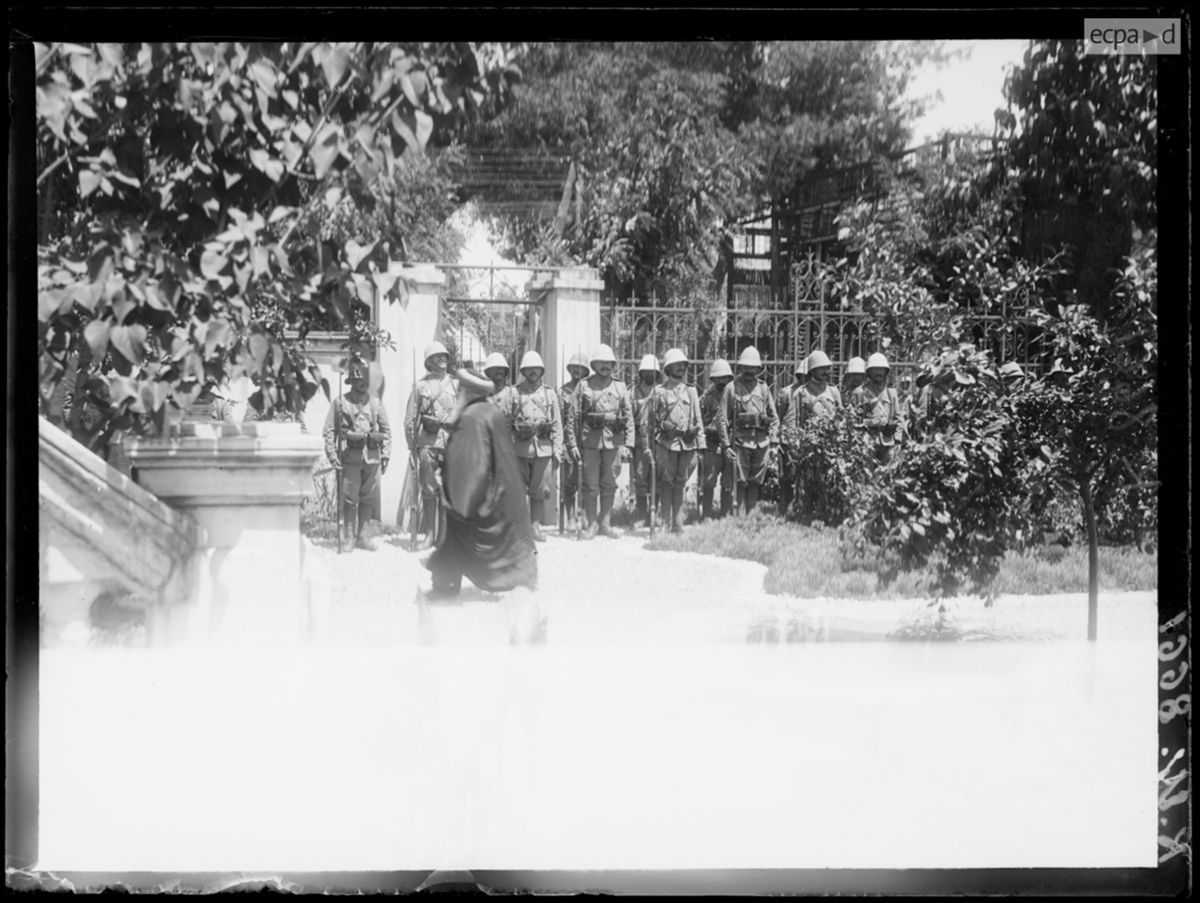
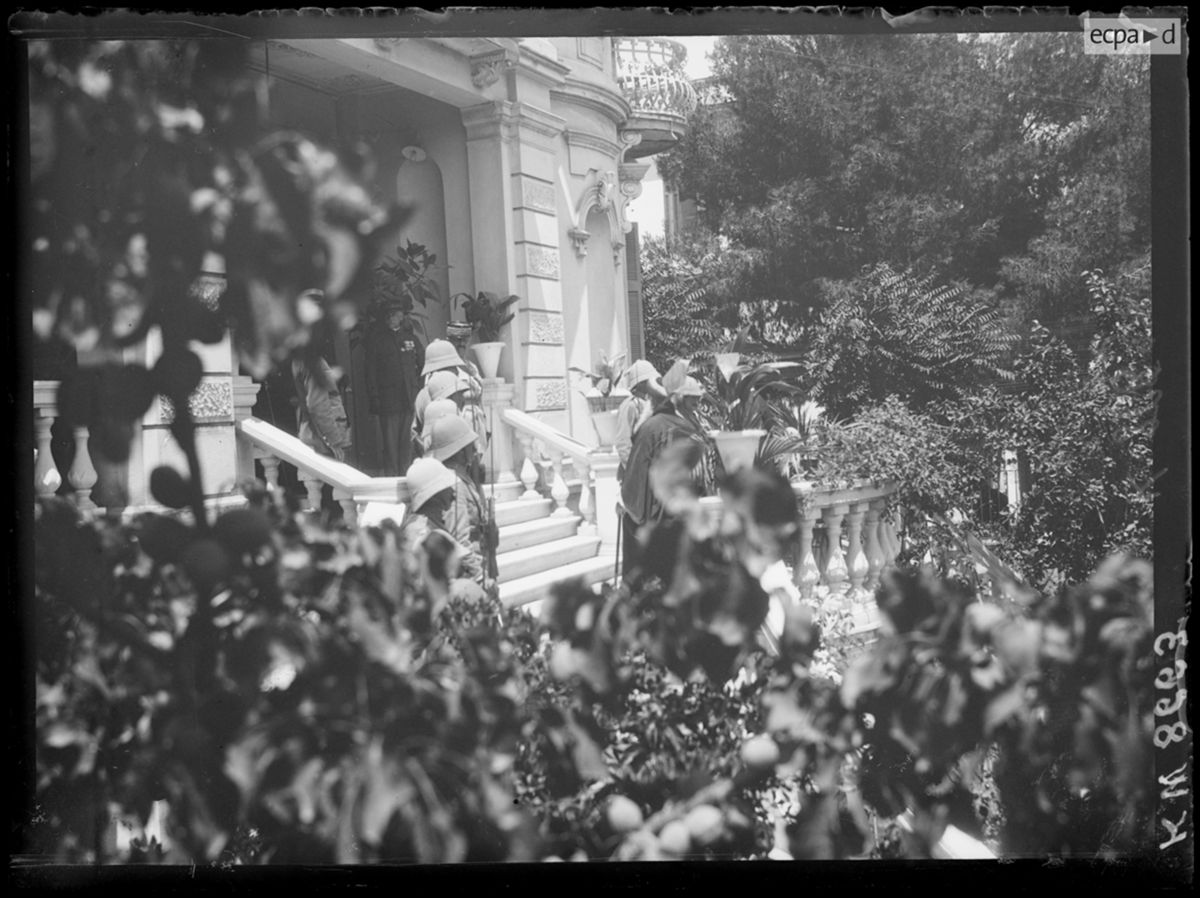
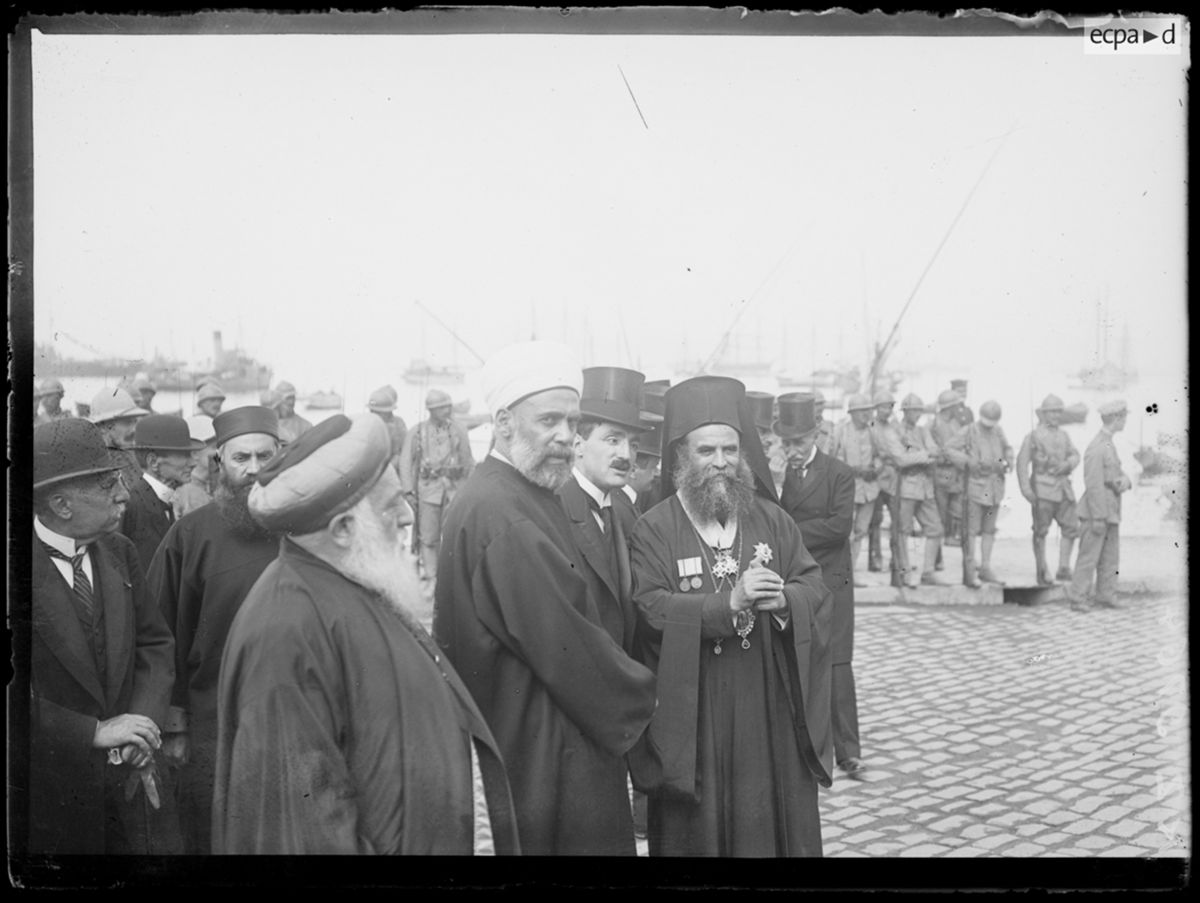
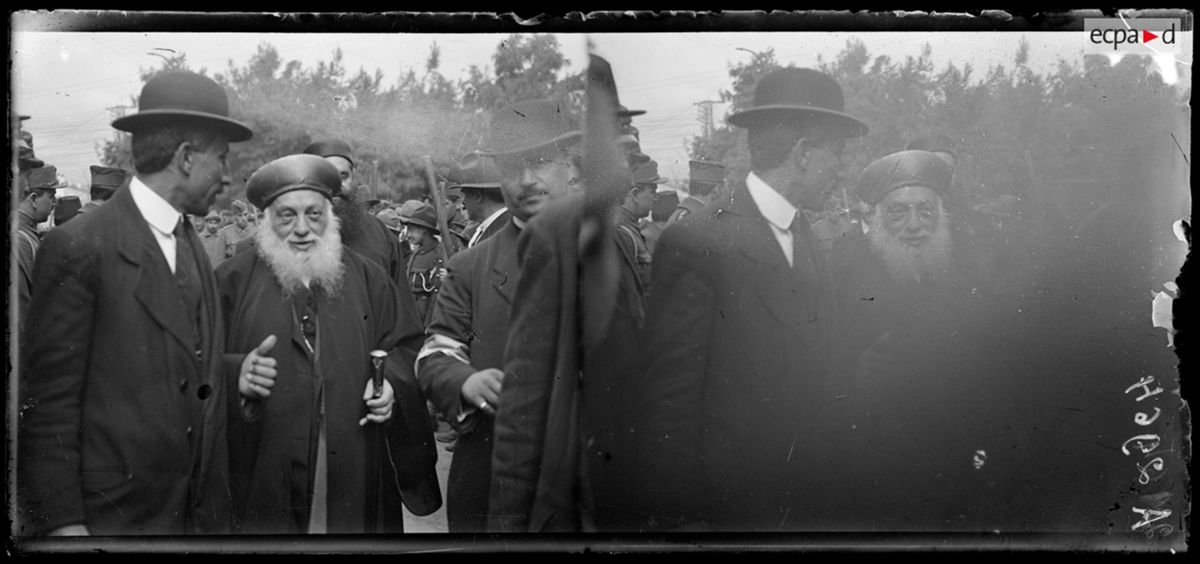
French army photographs, Salonika, 1918. Preserved by ECPAD.
Desperey Street
Allied headquarters, Salonika (Thessaloniki), Greece
Desperey Street (Οδός Δεσπεραί)
40.6285804, 22.9526793
Satellite view of Desperey Street today, named for General Franchet d’Espèrey. The exact residence used as Allied headquarters in November 1918 is not pinned here.
The film and what followed
In 1919 Rabbi Meir left Salonika and returned to Jerusalem. In 1921 he became Sephardic Chief Rabbi of Mandatory Palestine (British-ruled Palestine). He held that office until his death in Jerusalem on 26 May 1939.
Timeline
- 1856
- Rabbi Jacob Meir born in Jerusalem.
- 1908, 1919
- Grand Rabbi of Salonika.
- 1 January 1916
- Filmed at General Sarrail’s New Year reception in Salonika.
- April 1916
- Filmed leaving a Salonika shul on Passover.
- 14 July 1916
- Filmed at General Sarrail’s Bastille Day reception.
- 8 November 1916
- Filmed arriving at the Saint-Dimitri church Te Deum in Salonika.
- June 1918
- General Franchet d’Espèrey takes command of the Allied armies at Salonika.
- 23 June 1918
- Rabbi Meir is made a Chevalier of the Légion d’honneur at the general’s residence.
- 19 July 1918
- L’Univers israélite prints Guillaumat’s letter and Rabbi Meir’s reply on the Légion d’honneur.
- 29 September 1918
- Bulgaria signs an armistice at Salonika.
- November 1918
- Reception at Allied headquarters filmed; Rabbi Meir among the guests.
- 1919
- Rabbi Meir returns to Jerusalem.
- 1921, 1939
- Sephardic Chief Rabbi of Mandatory Palestine.
- 26 May 1939
- Rabbi Meir dies in Jerusalem.