← All Reels
Galician Jewry · Lwów, November 1929

A Rebbe on the Stairs in Lwów

Published

A Rebbe in a kolpik stands with chasidim on a Lemberg stairwell in Honon Katz’s 1929 amateur reel.

Honon Katz, 1929. Silent 16mm. United States Holocaust Memorial Museum, gift of Dita Sperling. Jump: Kovno, Riga, Lwów, The rabbi.

A camera in Lwów

Honon Katz is in Lwów in 1929 with a camera. He has come from Berlin to visit his parents in Kovno, and he is here on his father’s bicycle business. He walks the city and films what he sees: streets, winter light, people passing the lens.

Then the camera catches something else. A public building. A knot of men on the stone steps. Long coats. Hats. Beards. Peyos. Toward the center of the cluster stands a taller dark hat, a kolpik.

The rabbi on the stairs

The man in that kolpik is believed to be Reb Pinyele Ostiler, Rabbi Pinchas Twersky of Ustilug (ר' פיניע'לע אוסטילער). A gabbai stands with him. Chasidim fill the steps.

Known photograph of Reb Pinyele Ostiler walking with two men holding his arms, in a fur hat and dark coat
A known photograph of Reb Pinyele Ostiler.
Chasidim in long coats and hats descending stone steps in Lwów, 1929
On the stairs in the reel.

Reb Pinyele Ostiler

He was Reb Pinchas Twersky, the son of Reb Mordechai of Rachmastrivka, and son-in-law of the Belzer Rebbe, Reb Yissachar Dov Rokeach. The wedding was in Belz in 1900. He lived there for years at his father-in-law’s side. In 1923 he became rav in Ustilug. Later he was rav in Przemyśl. Chasidim came to him in both places.

When the war broke in 1939 he fled with his family to Sambor. From there he was deported to Bełżec. The family was murdered at Sambor. One daughter survived: Trani, wife of the Skverer Rebbe, Reb Yaakov Yosef Twersky. His Torah was later gathered in She’erit Lepinchas.

On these stairs he is still a man in his late forties. Fourteen years later, on 17 Iyar 5703, he is murdered at Bełżec, hy”d.

On the trains

The papers of these years keep finding Reb Pinyele on the road.

No newspaper found so far names this gathering on the stairs.

A movie poster in the street

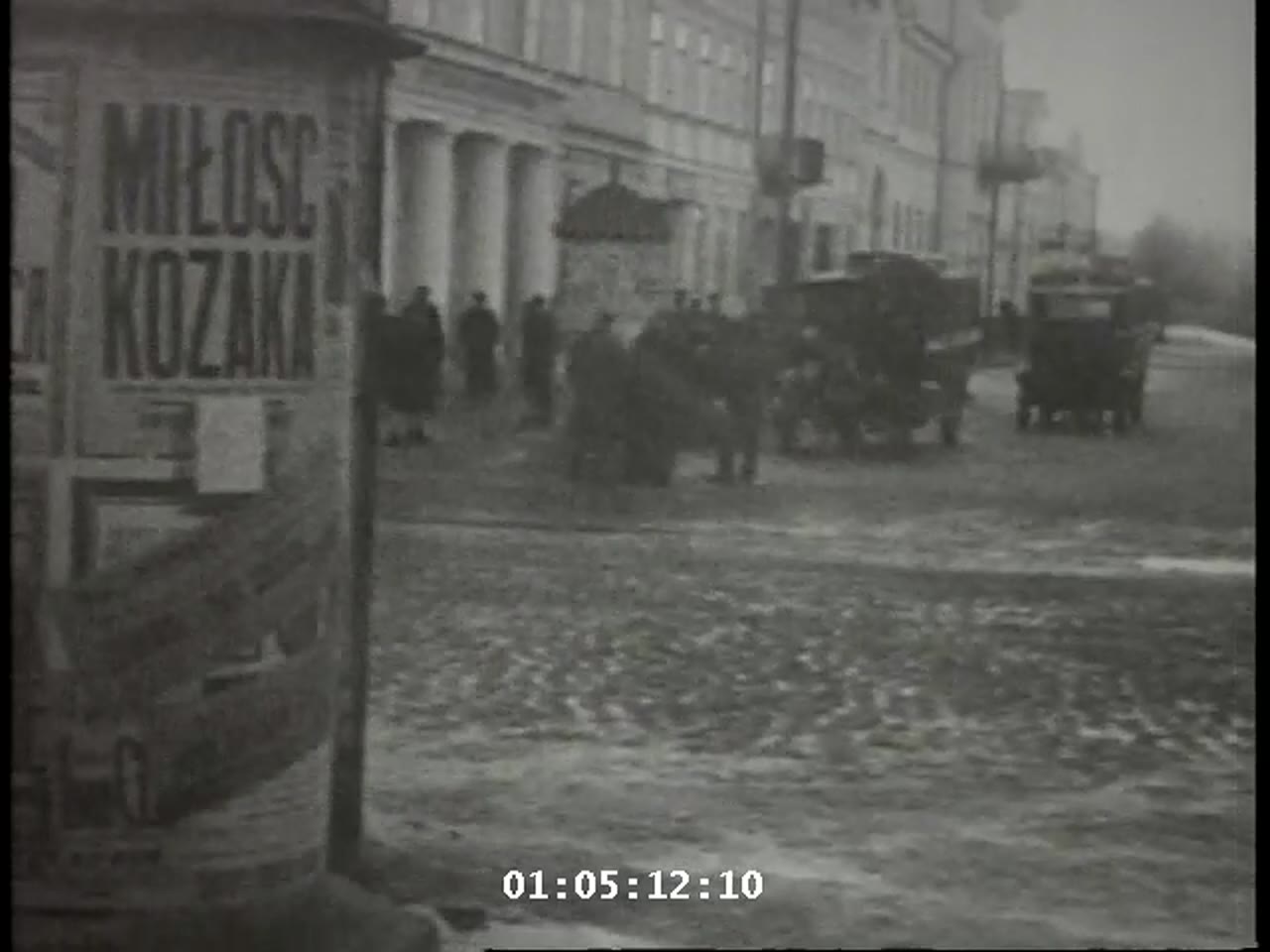
Earlier in the same Lwów visit, Katz films a cylindrical kiosk in the street. Across it, in heavy capitals, is a movie title: MIŁOŚĆ KOZAKA. That is the Polish name for an American picture, The Cossacks. A few seconds later, cadets in winter coats walk a tree-lined promenade, with a small dog in the foreground.

Cylindrical advertising kiosk in Lwów with a poster reading MIŁOŚĆ KOZAKA
The movie poster on the kiosk.
Polish cadets in winter overcoats and military caps walking a tree-lined promenade in Lwów
Cadets on a winter walk.

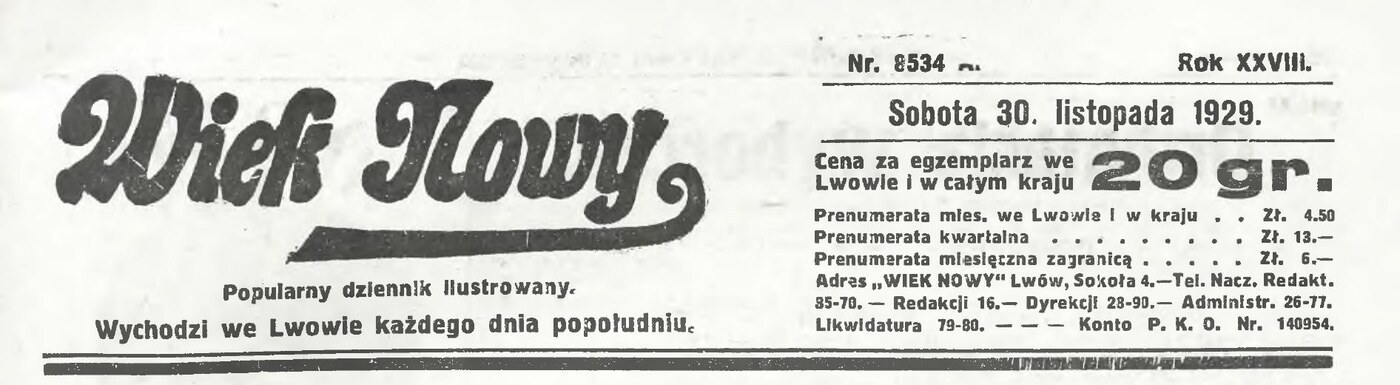
The poster is for a movie playing that week. On Saturday, 30 November 1929, the Lwów paper Wiek Nowy printed today’s premiere of that movie at a cinema called Fatamorgana. Friday the 29th the city was marking the November Uprising. The cadets on the walk would fit that Friday.

Masthead of Wiek Nowy, Saturday 30 November 1929, published in Lwów
Wiek Nowy, Saturday 30 November 1929.
Wiek Nowy cinema advertisement: DZIŚ PREMIERA of Miłość Kozaka at Fatamorgana, pl. Marjacki 10
The cinema, pl. Marjacki 10: today’s premiere.
Wiek Nowy notice headed KU UCZCZENIU ROCZNICY POWSTANIA LISTOPADOWEGO, referring to Friday the 29th
The city marking the Uprising: Friday the 29th, on the Lwów stage.
Masthead of Wiek Nowy, Friday 29 November 1929, published in Lwów
Friday’s paper, 29 November 1929.

We do not know the date for certain. If those newspapers are a guide, a fair guess is Friday, 29 November 1929: 26 Cheshvan 5690, erev Shabbos. The stairs come later in the same Lwów visit.

The movie theater

That poster belongs to a movie theater on Mariacki Square. The theater was called Fatamorgana.

Kino Fatamorgana
pl. Mariacki 10, Lwów (today Mitskevycha Square / Mickiewicz Square, Lviv)
49.8397, 24.0297

Mickiewicz Square today, the old plac Mariacki. The movie theater was at number 10. The building is gone.

The film and what followed

The reel left the city with Katz. In 1932 he left Berlin for France. At the start of the war he left his belongings, including the film, in his Paris apartment and went south.

Dita Sperling was his niece. She took the reel from him in Paris in 1973. She had survived the Kovno ghetto, a labor camp at Šančiai, and Stutthof. In 1995 she gave the film to the United States Holocaust Memorial Museum. The museum put it online.

Reb Pinyele’s petirah was 17 Iyar 5703, at Bełżec, hy”d.

Timeline

1880
Reb Pinchas Twersky is born; later known as Reb Pinyele Ostiler.
1900
He marries Chana Rochel, daughter of the Belzer Rebbe Reb Yissachar Dov Rokeach, in Belz.
1923
He becomes rav in Ustilug.
26 June 1928
He leaves Przemyśl for his son Yochanan’s wedding in Sighet. The paper says he will pass through Lemberg.
27 December 1928
He arrives in Lemberg from Przemyśl. Belzer chasidim meet him at the railway station.
22 August 1929
He takes an express train from Przemyśl through Tarnów to Krynica. Hundreds wait by the train in Tarnów. About a thousand people wait in Krynica.
29 November 1929
Lwów: a movie poster on a kiosk, cadets on a winter promenade, and later a rabbi on the stairs, believed to be Reb Pinyele Ostiler.
August 1930
He arrives in Krynica. Crowds wait at the railway and at stations along the way.
1932
Honon Katz leaves Berlin for France. Reb Pinyele Ostiler is still rav in Przemyśl.
1939
Reb Pinyele Ostiler flees with his family to Sambor.
17 Iyar 5703 / May 1943
Reb Pinyele Ostiler is murdered at Bełżec, hy”d. The family is murdered at Sambor. Daughter Trani survives.
1973
Dita Sperling recovers the reel from Honon Katz in Paris.
1995
She donates it to the United States Holocaust Memorial Museum. The museum puts it online.

Acknowledgments

Thank you to גלאזער of Ivelt for finding this reel in the archives, and to בן בוזי for the identification.

The film was in the United States Holocaust Memorial Museum. גלאזער found it there.

בן בוזי compared the man on the stairs to a photograph of Reb Pinyele Ostiler.