Greeting the Groom at Bobowa
At Bobowa’s railway station in March 1931, chassidim greet the groom’s train, and the Bobover Rebbe, Reb Ben Zion Halberstam, stands on the platform as his daughter Nechama Golda marries Mojżesz Stempel.
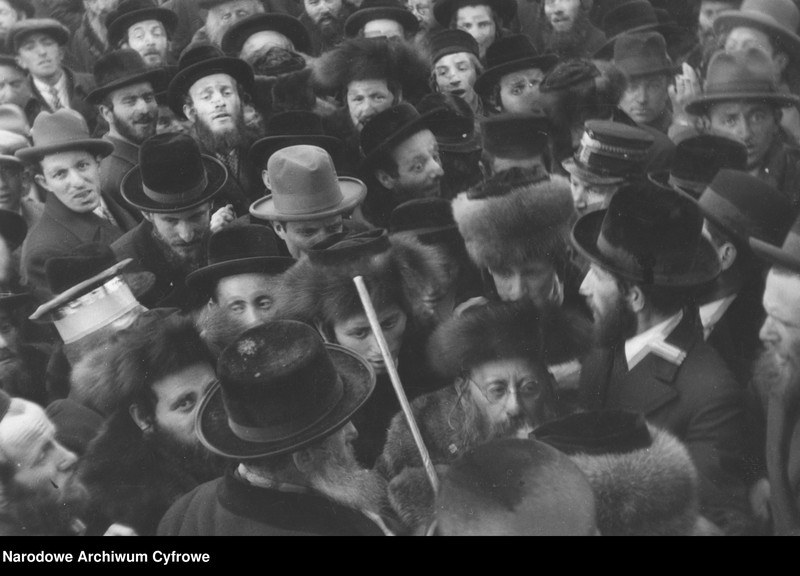
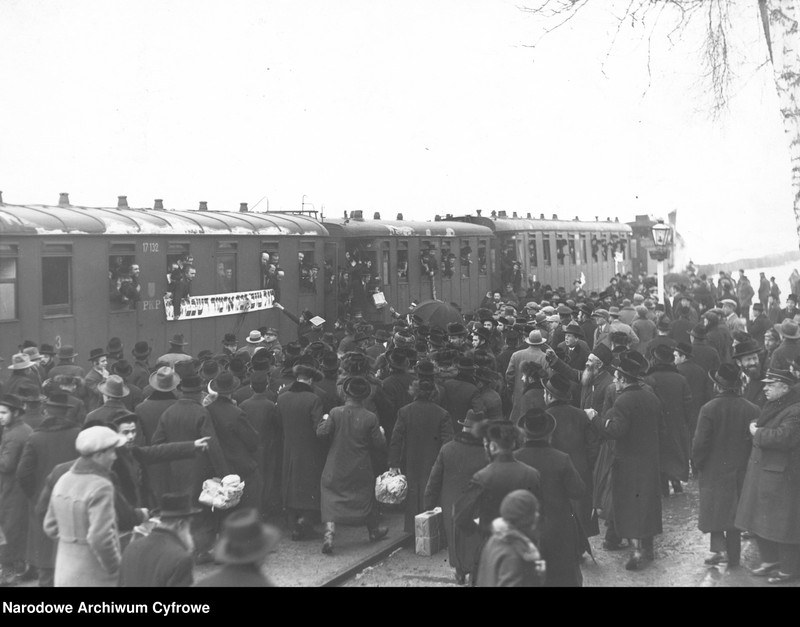
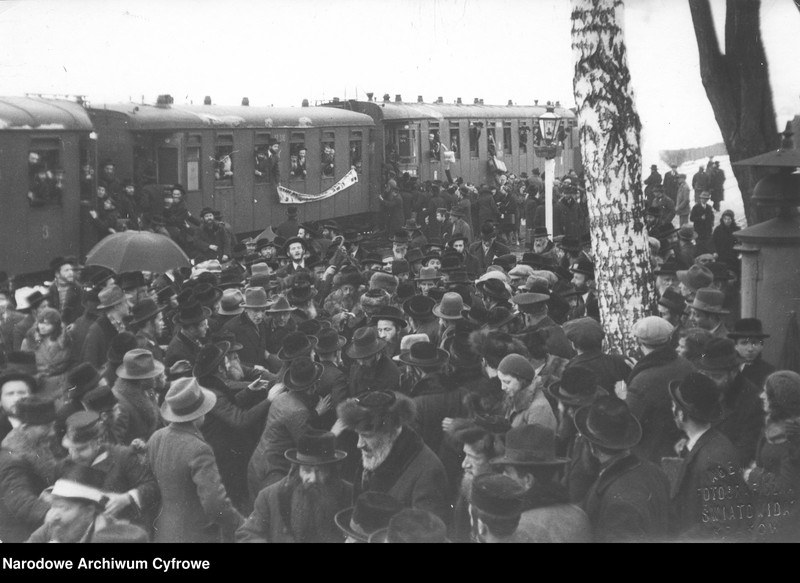
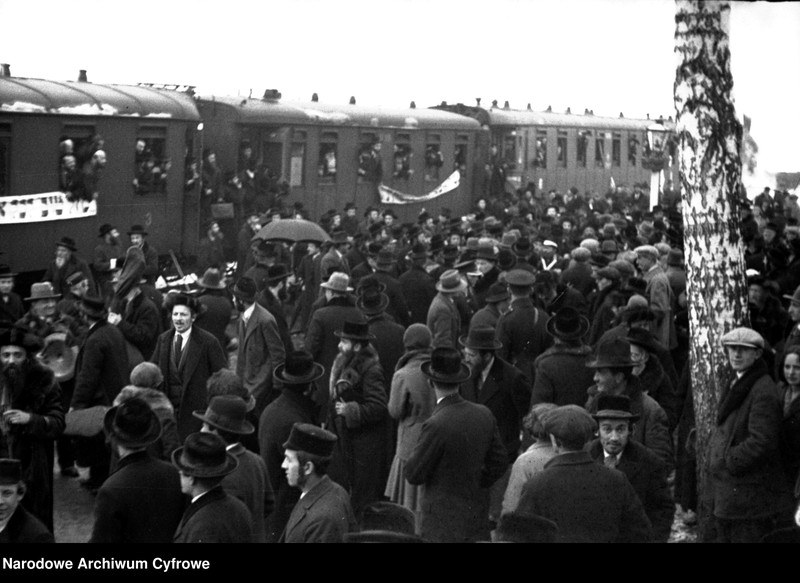
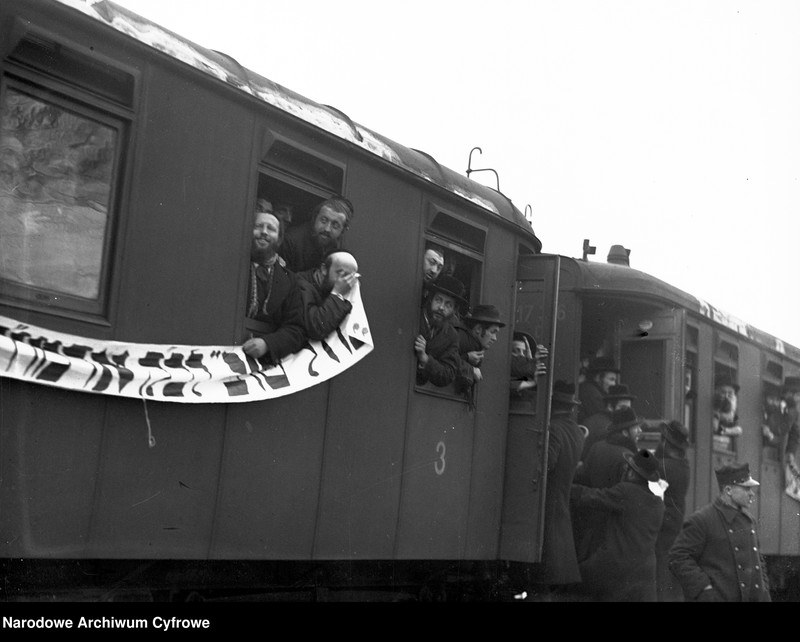
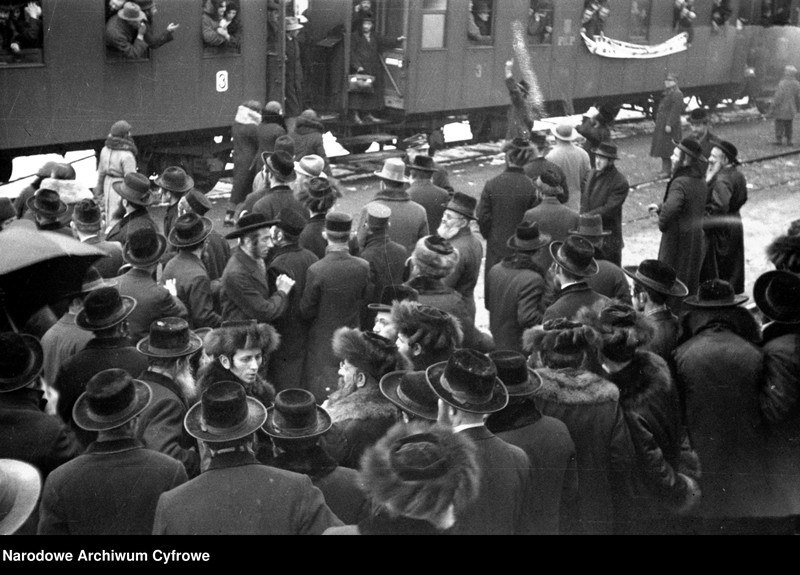
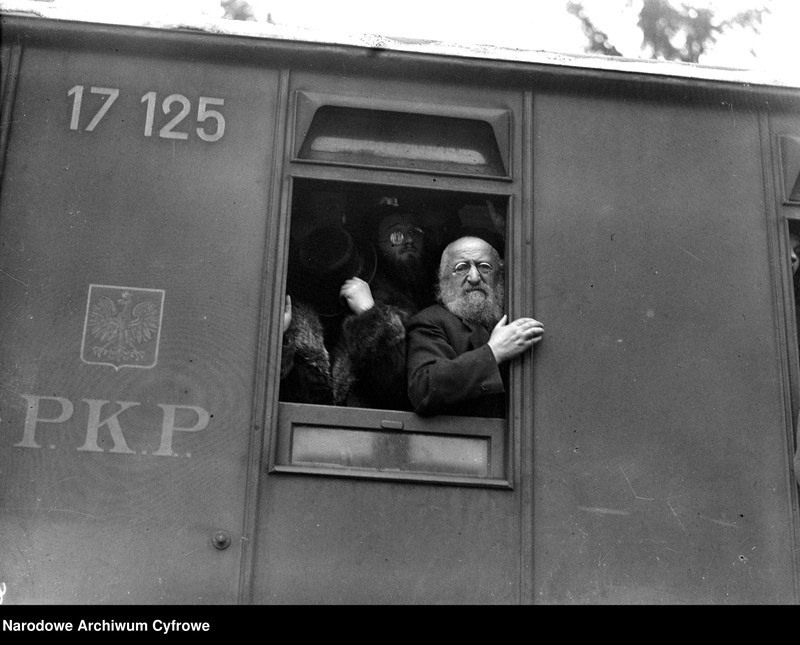
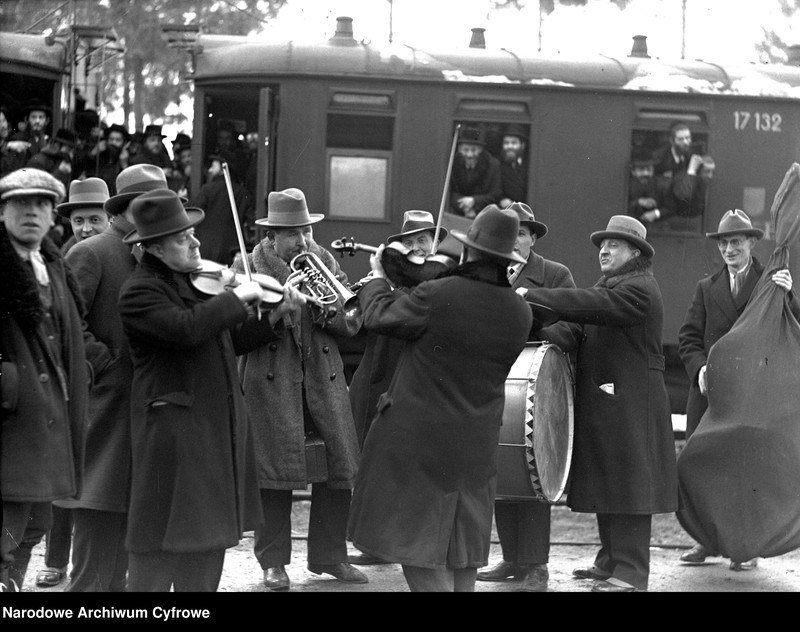
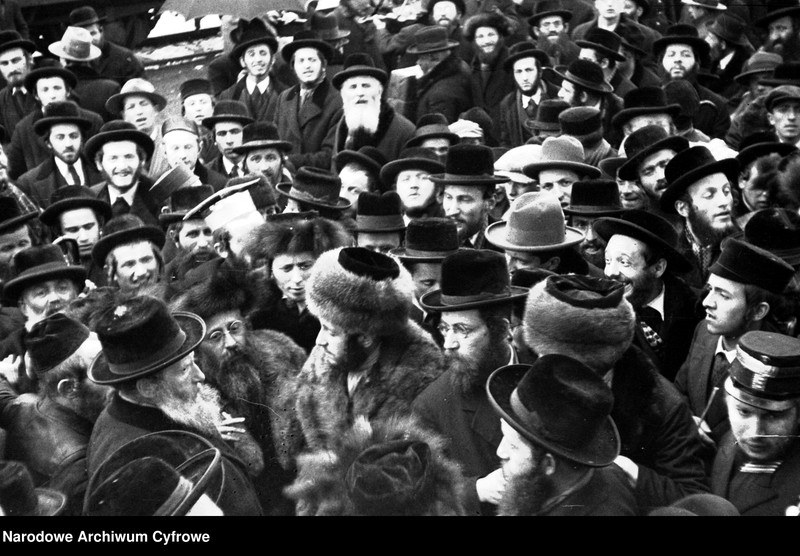
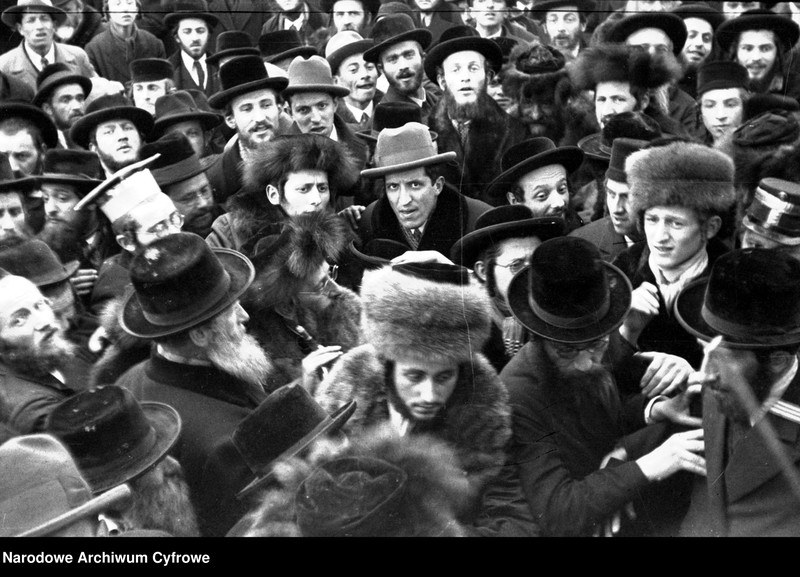
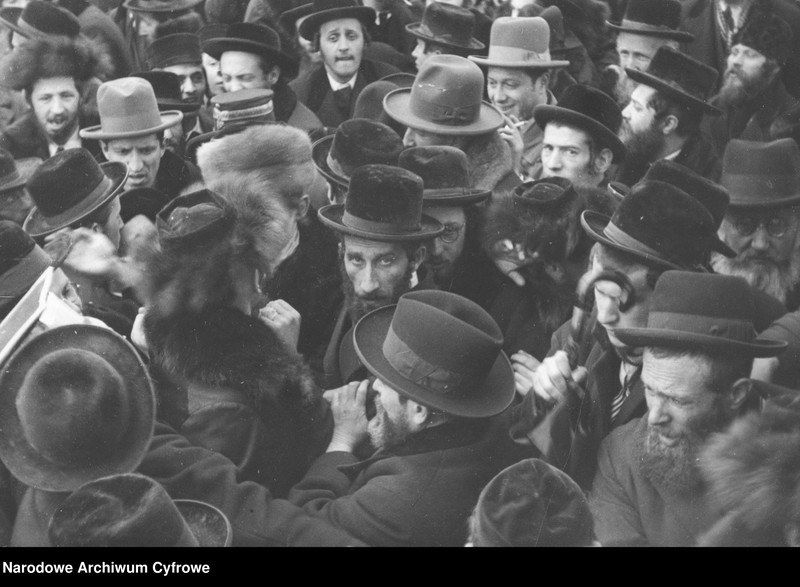
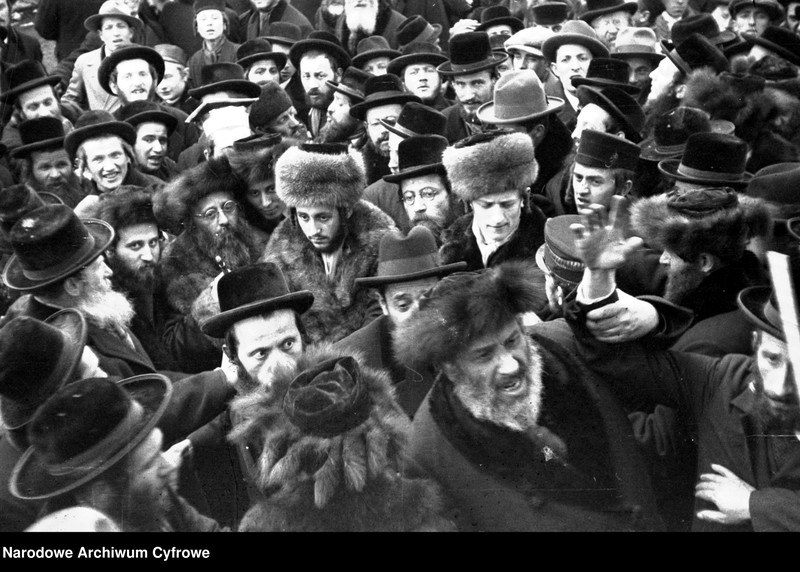
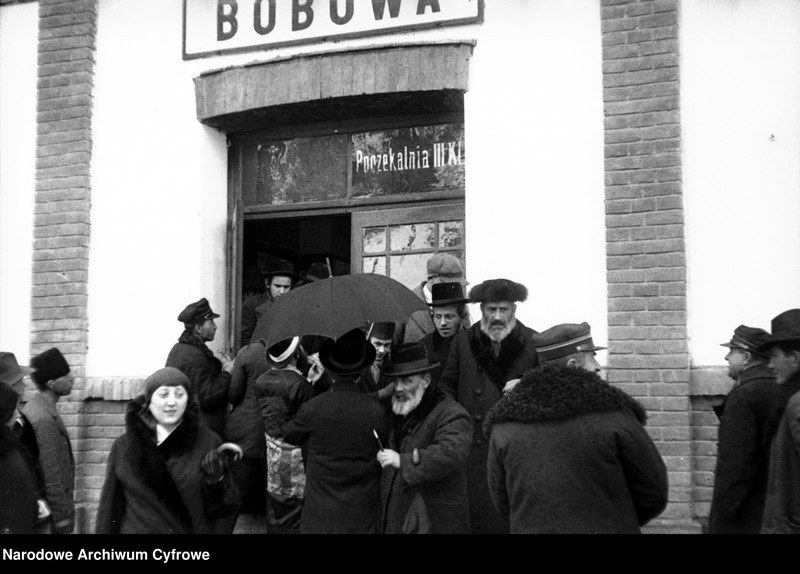
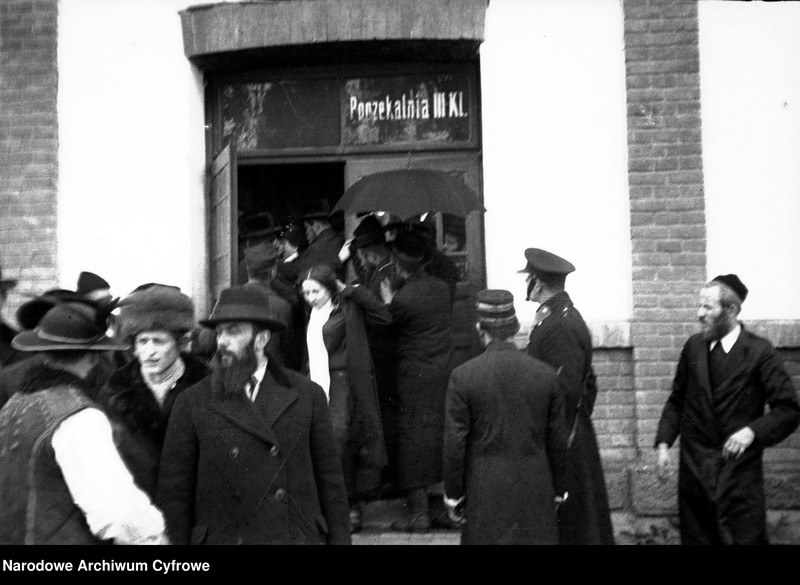
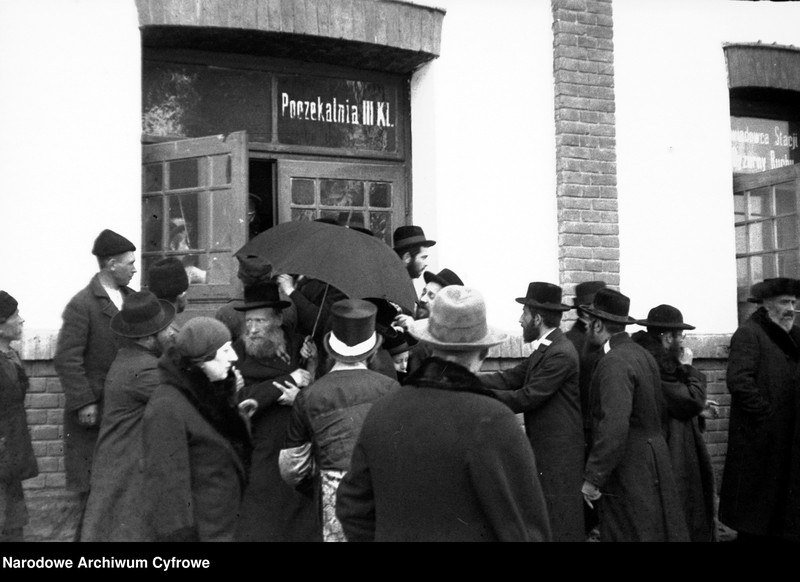
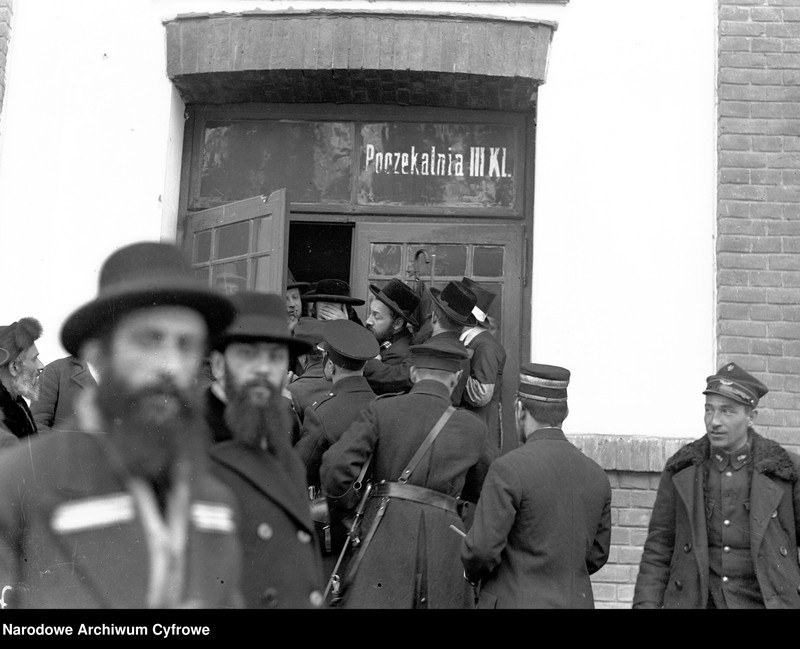
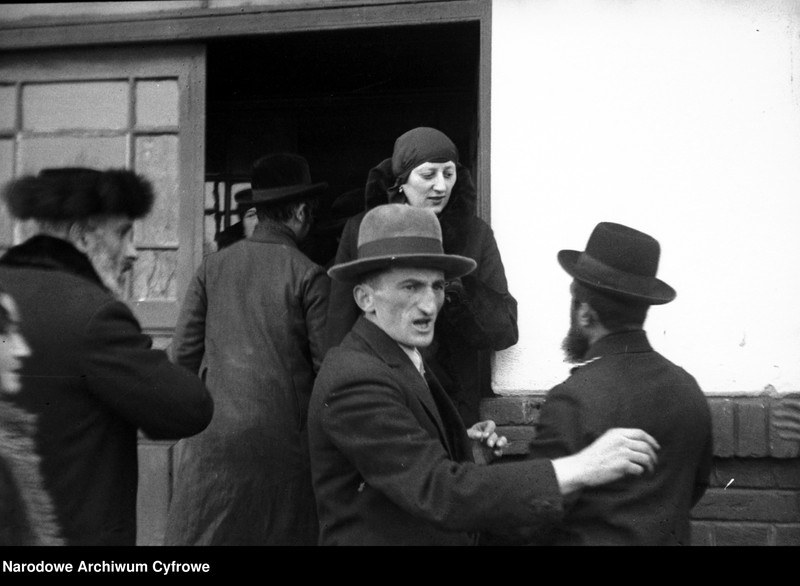
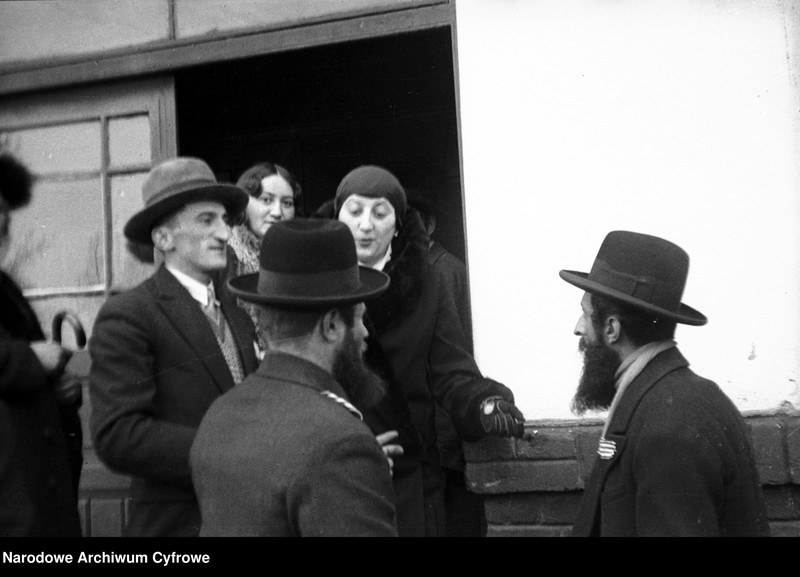
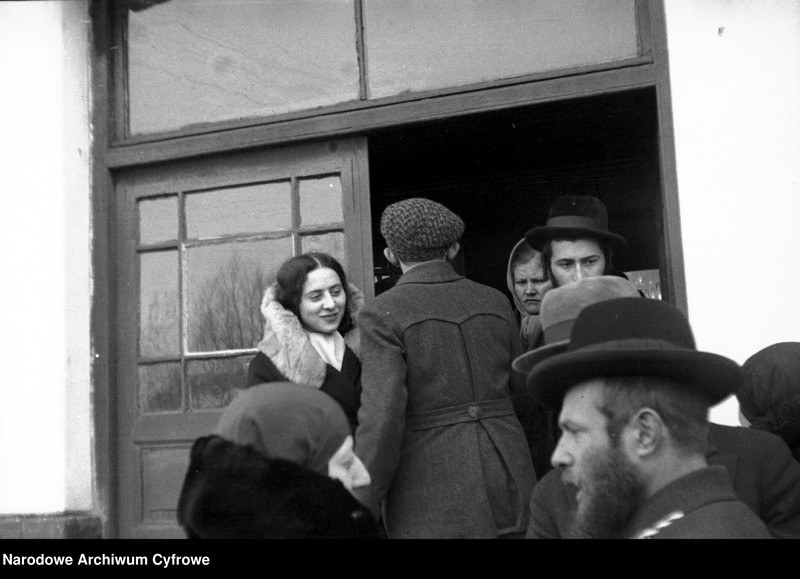
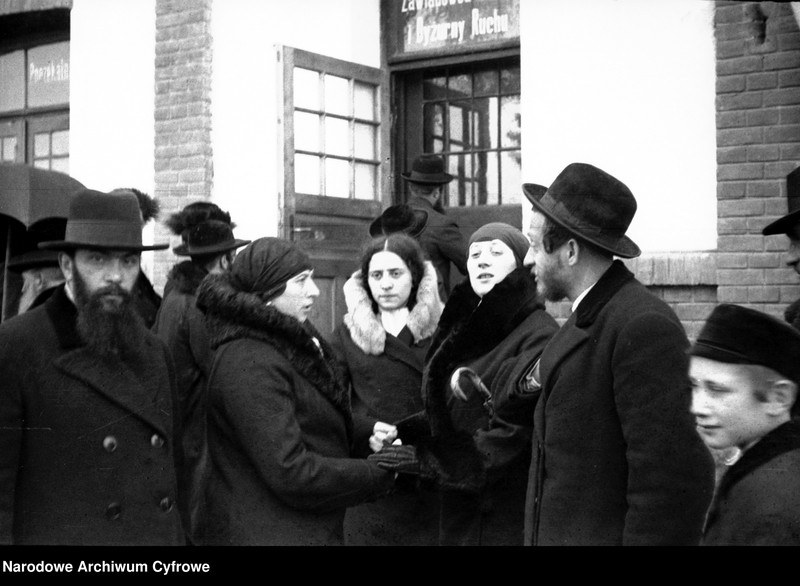
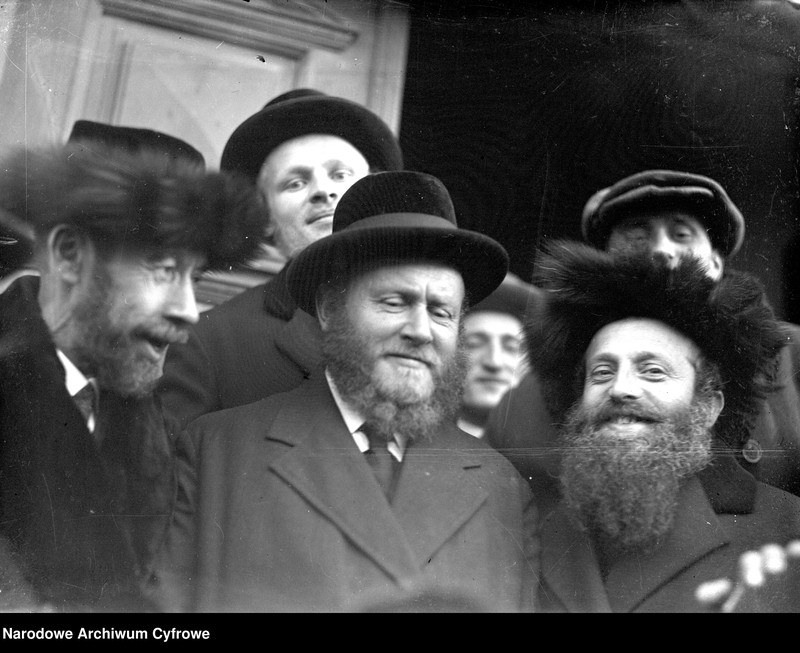
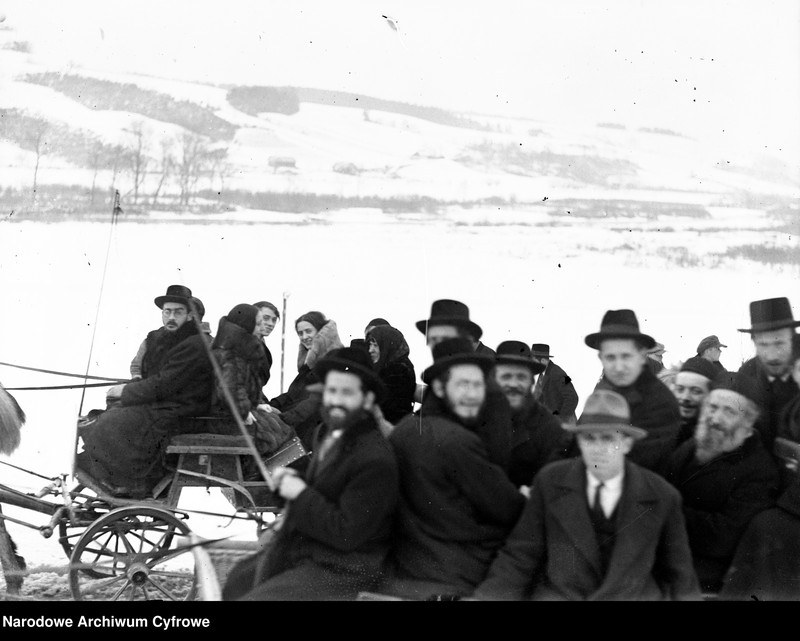
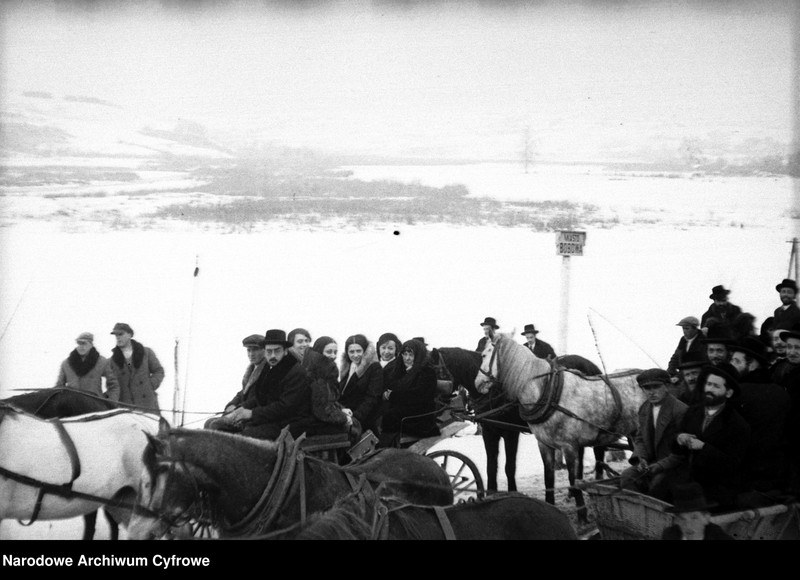
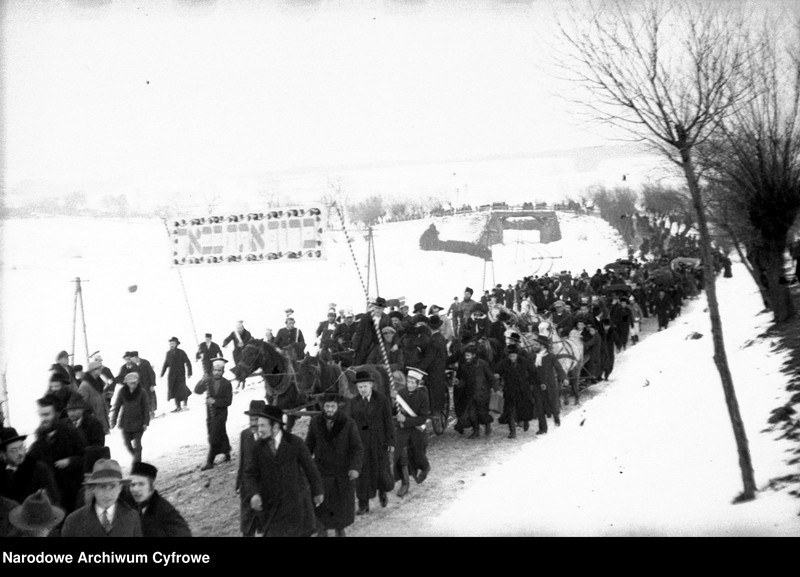
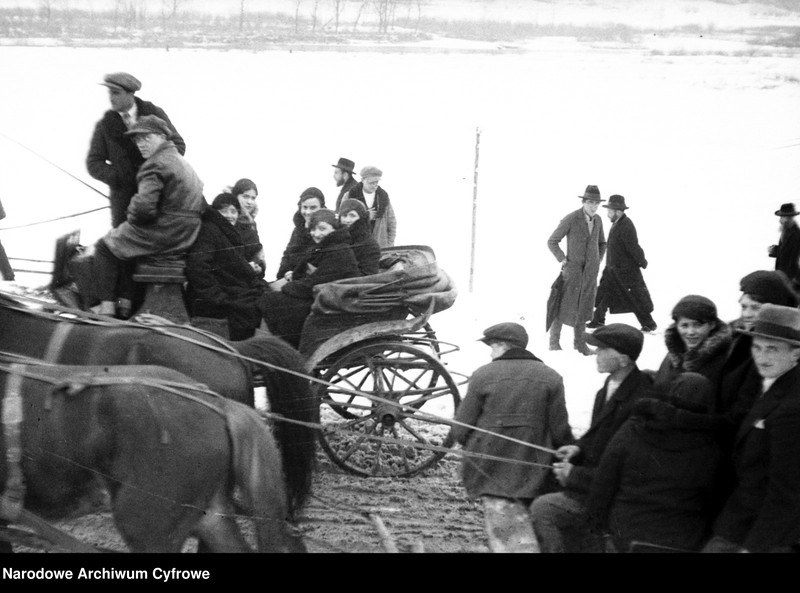
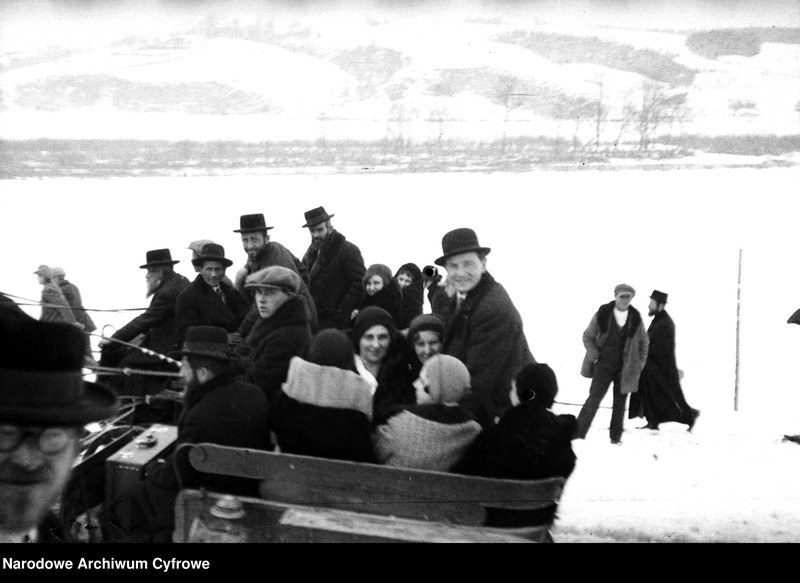
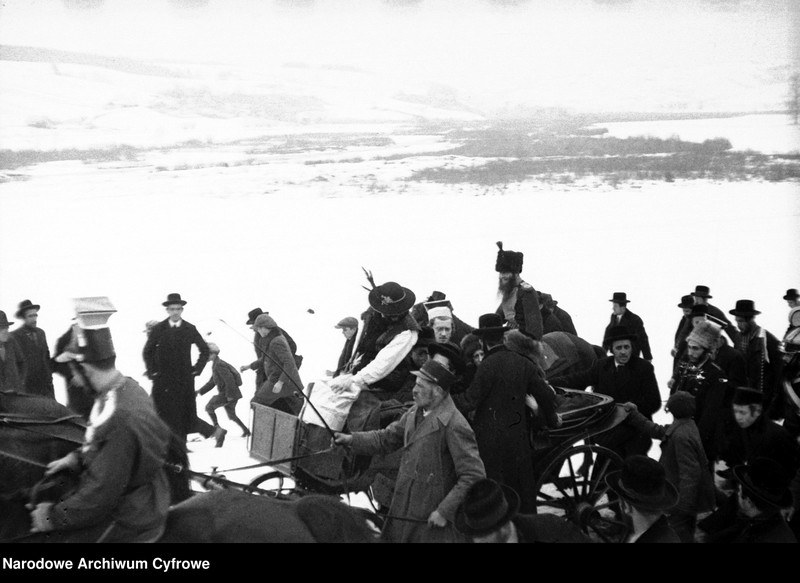
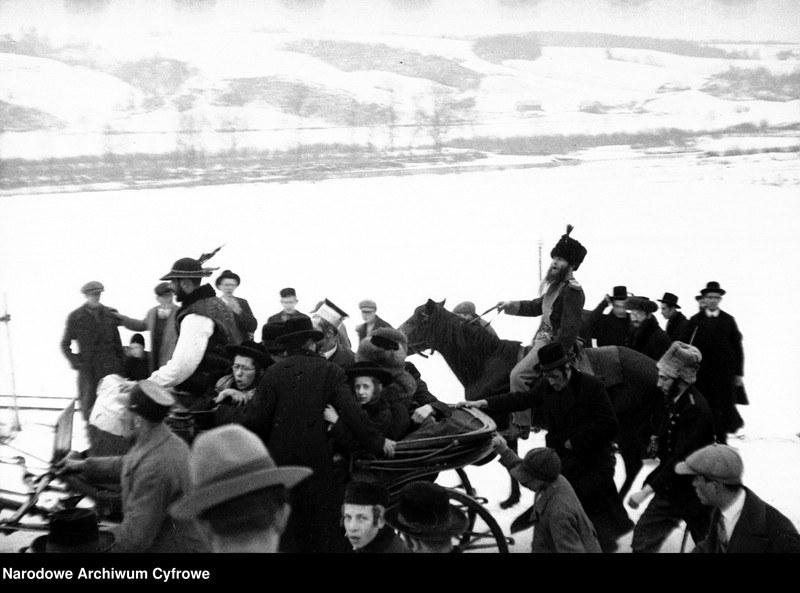
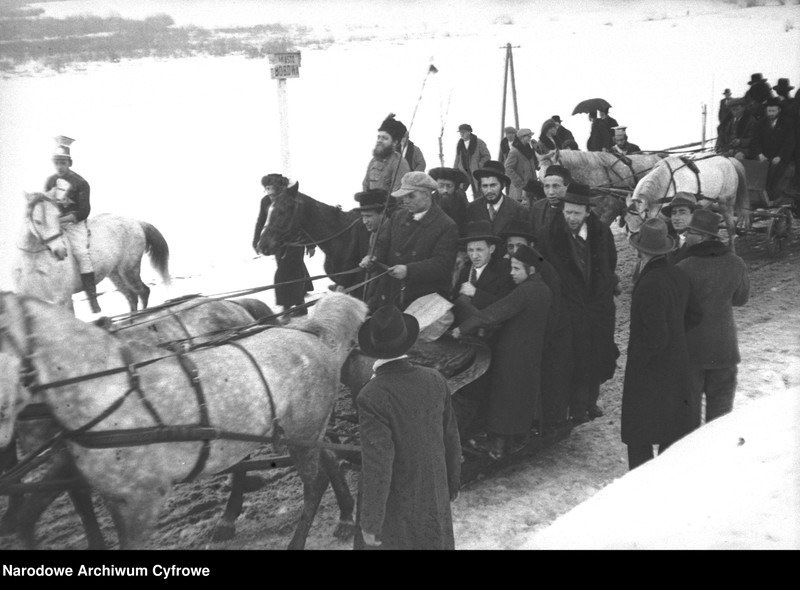
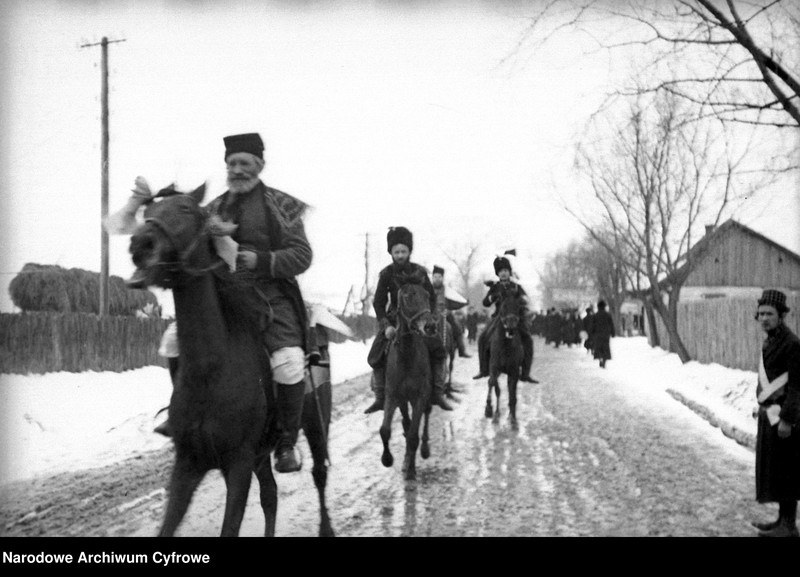
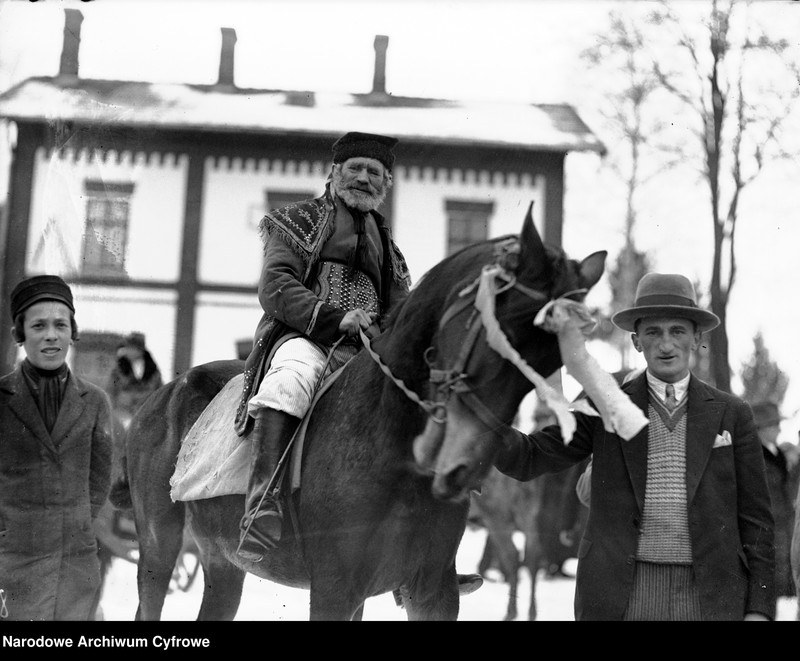
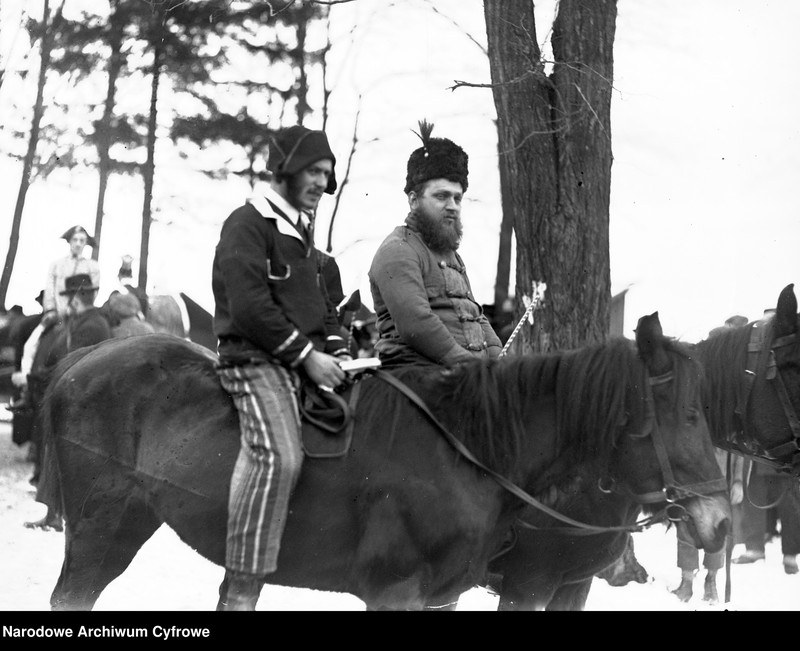
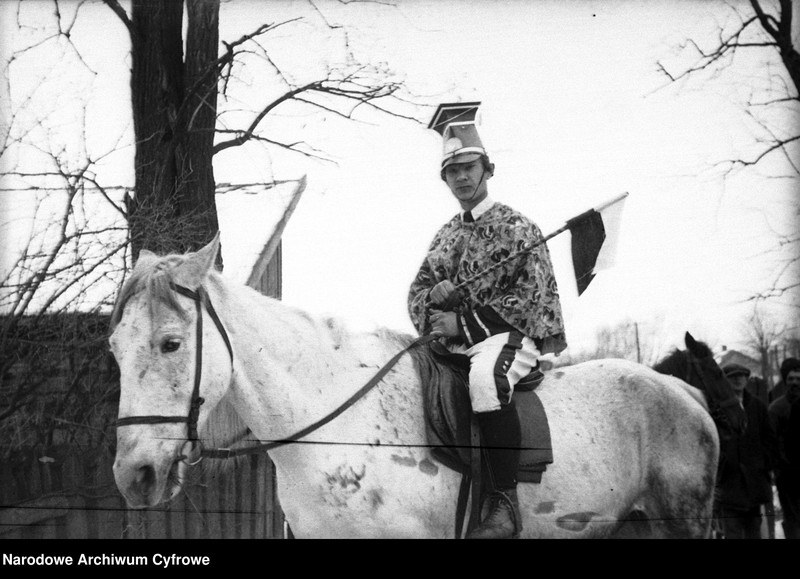
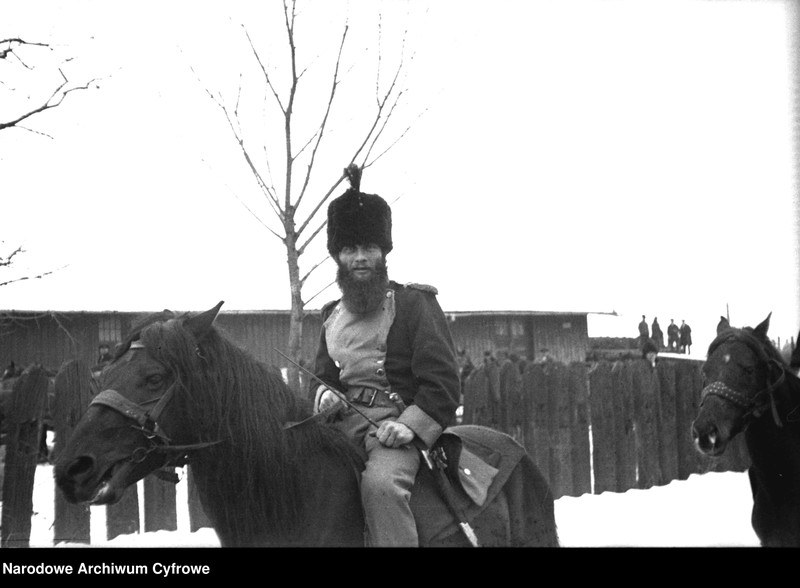
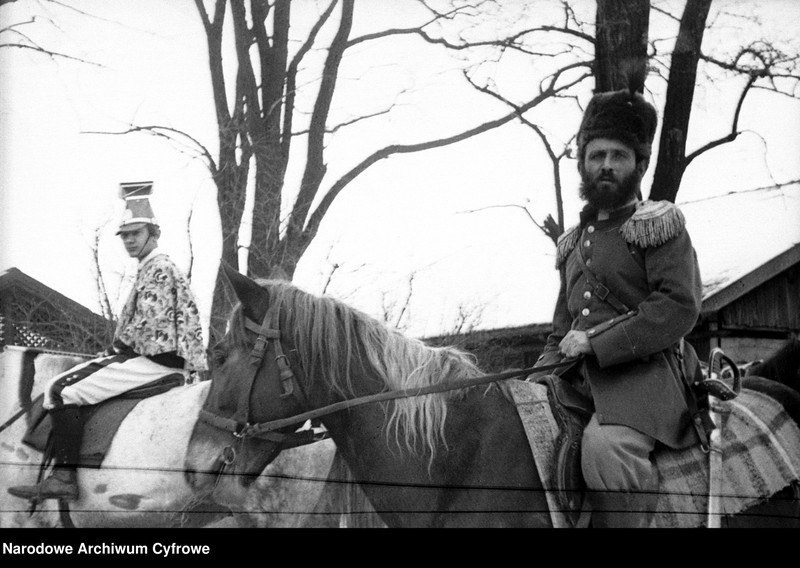
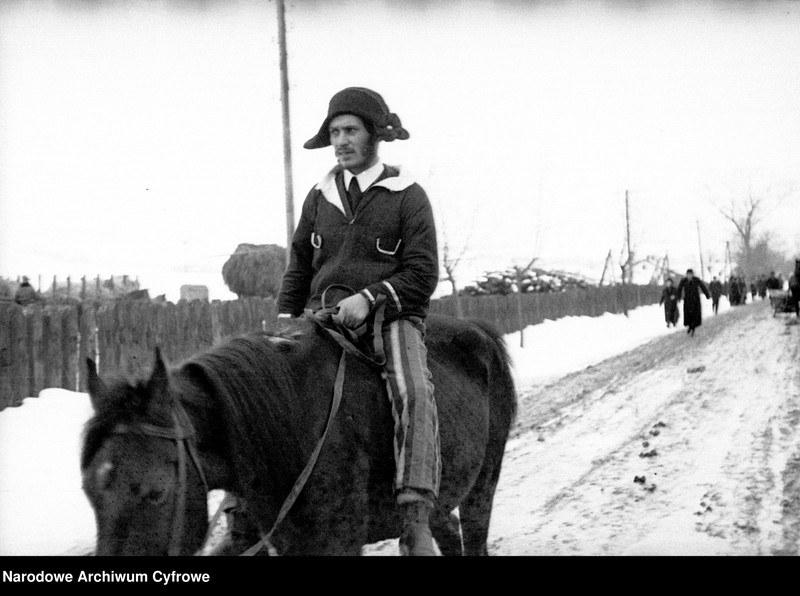
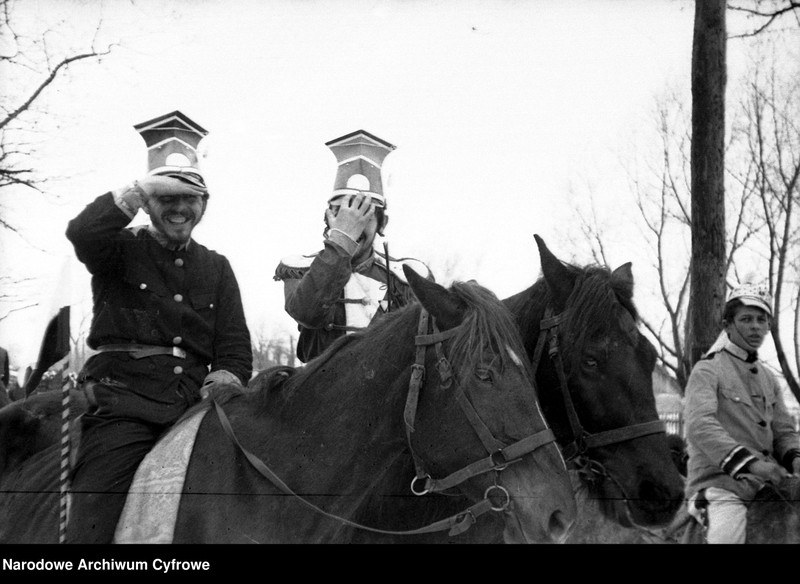
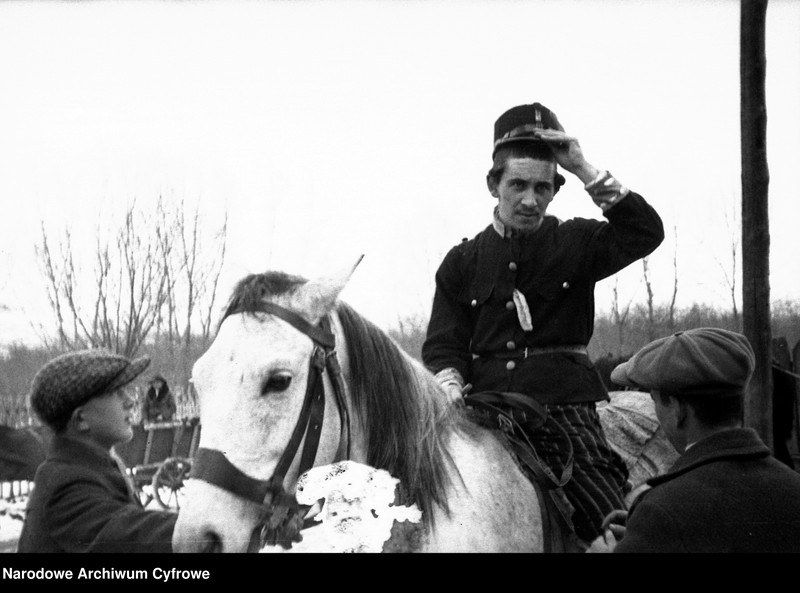
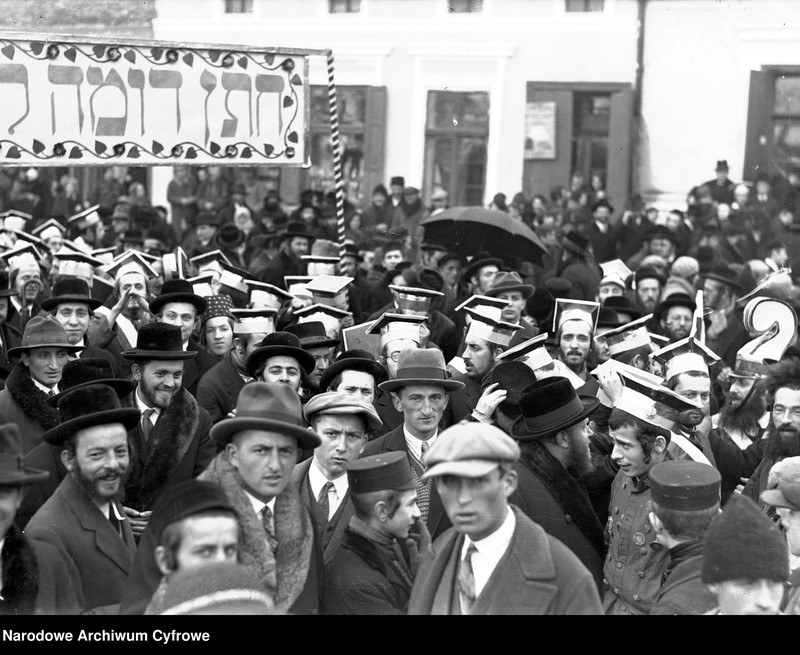
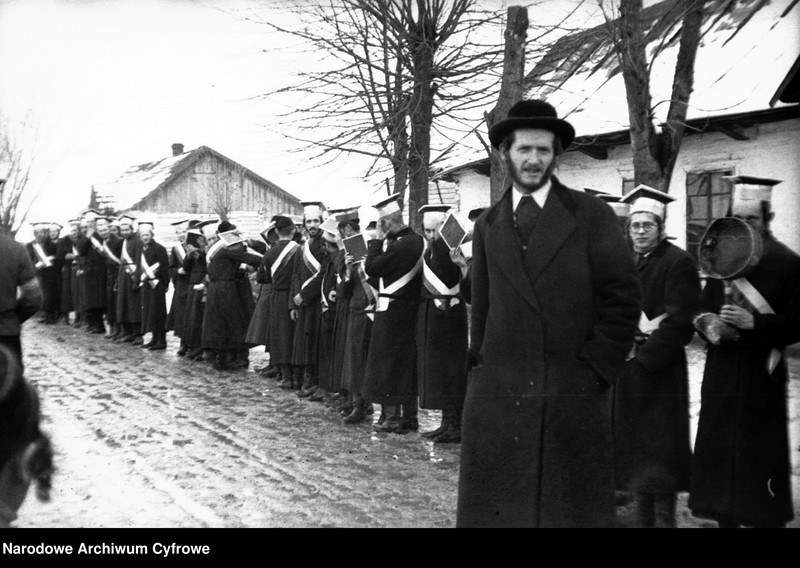
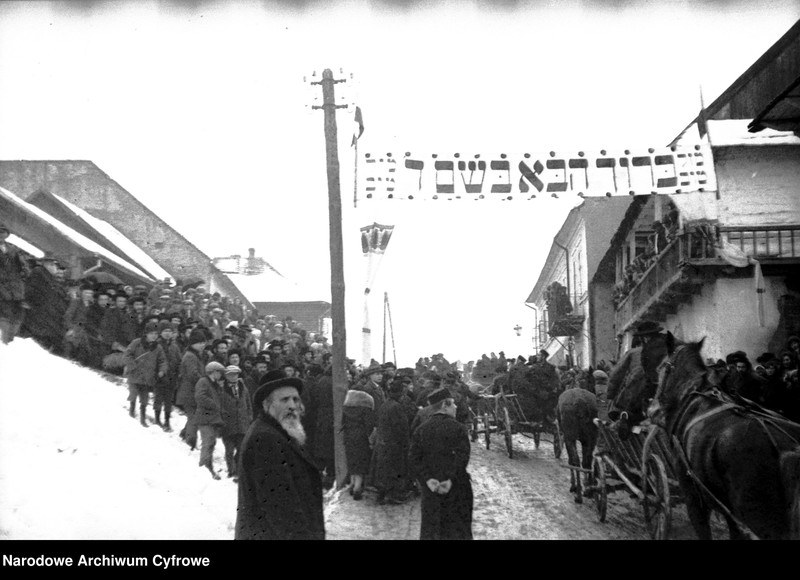
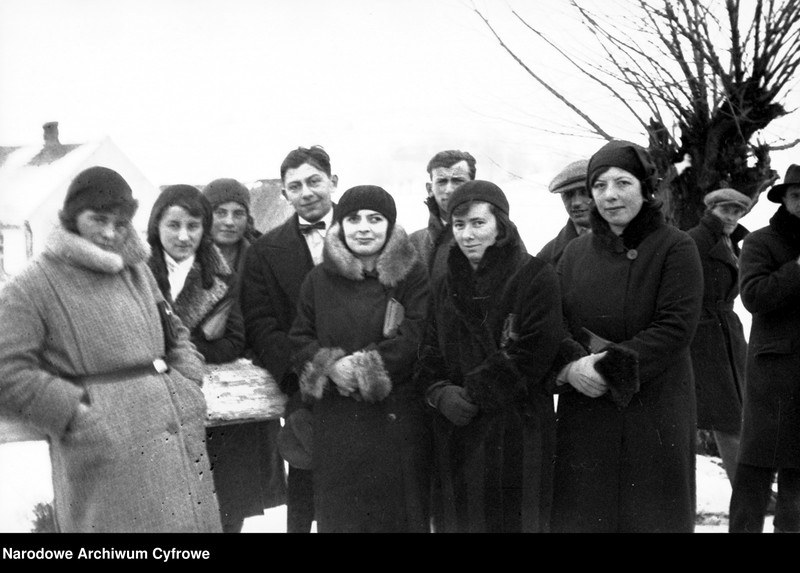
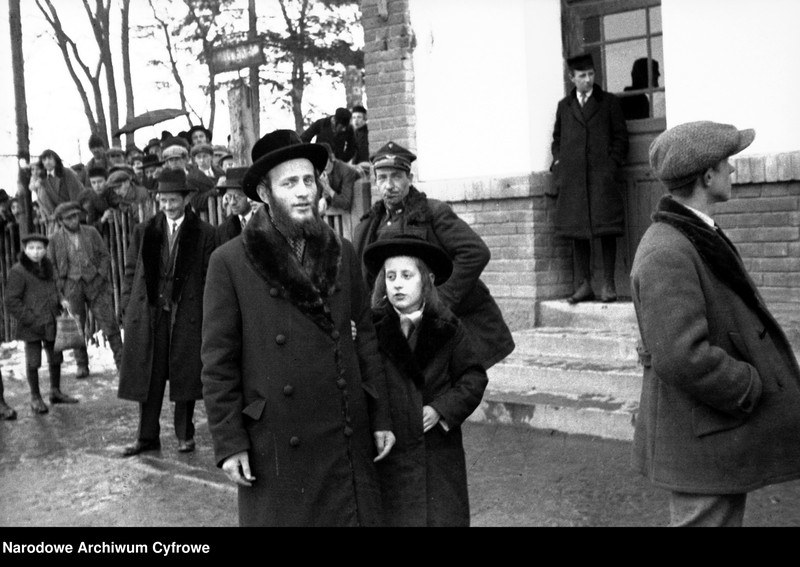
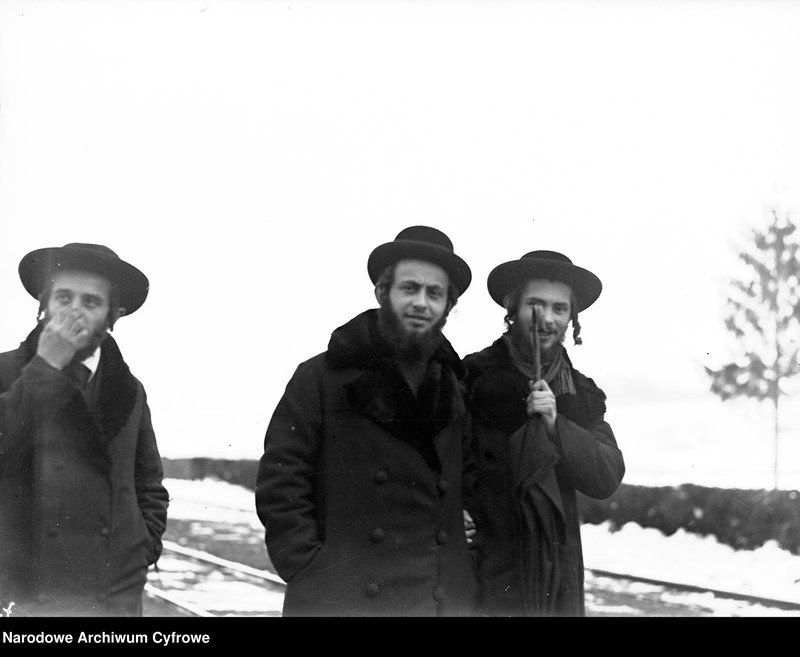
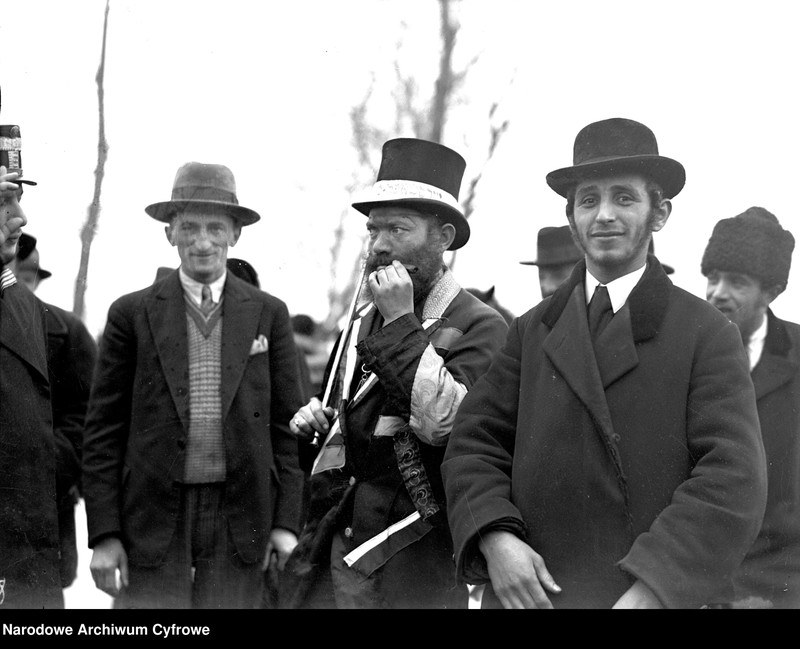
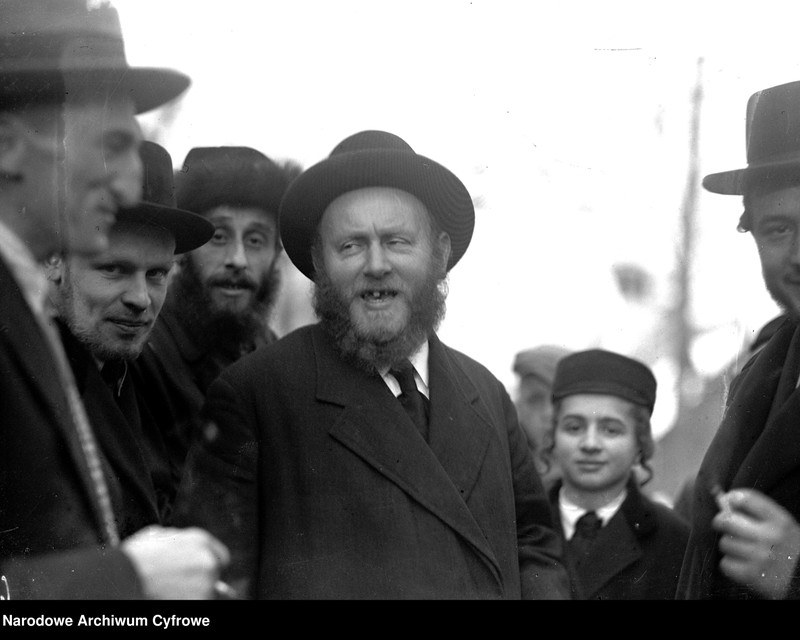
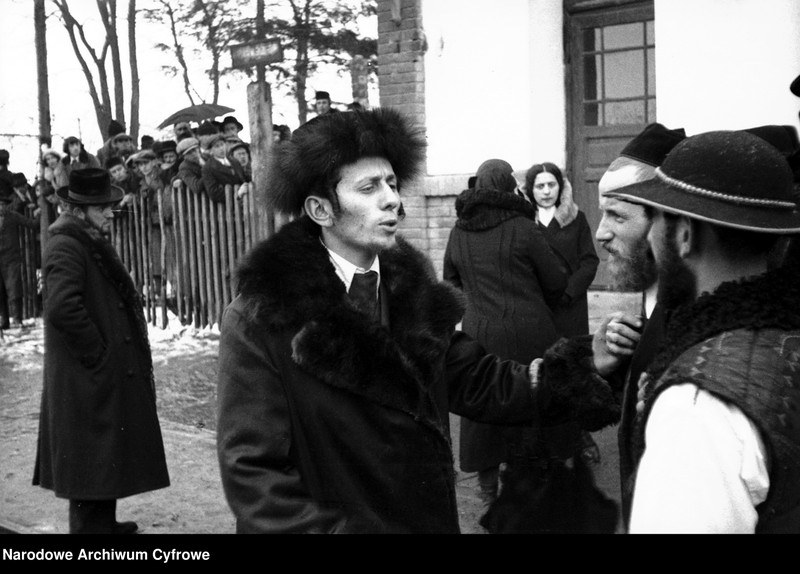
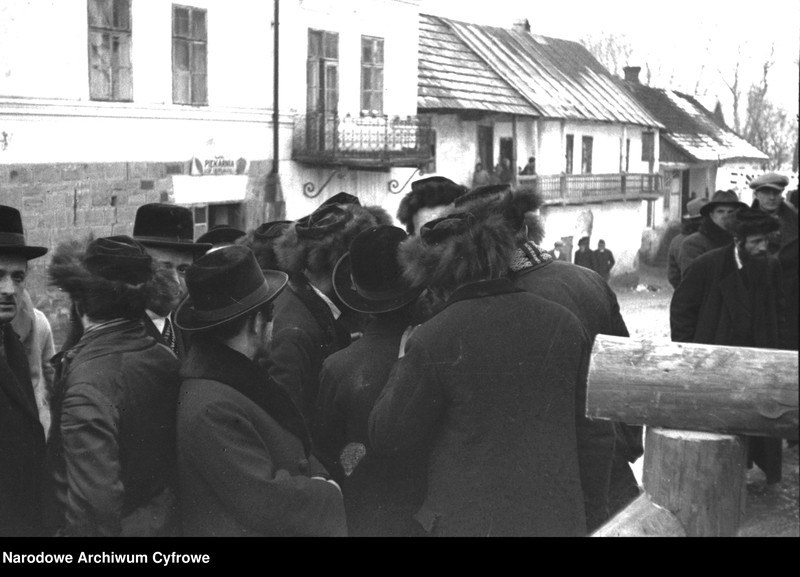
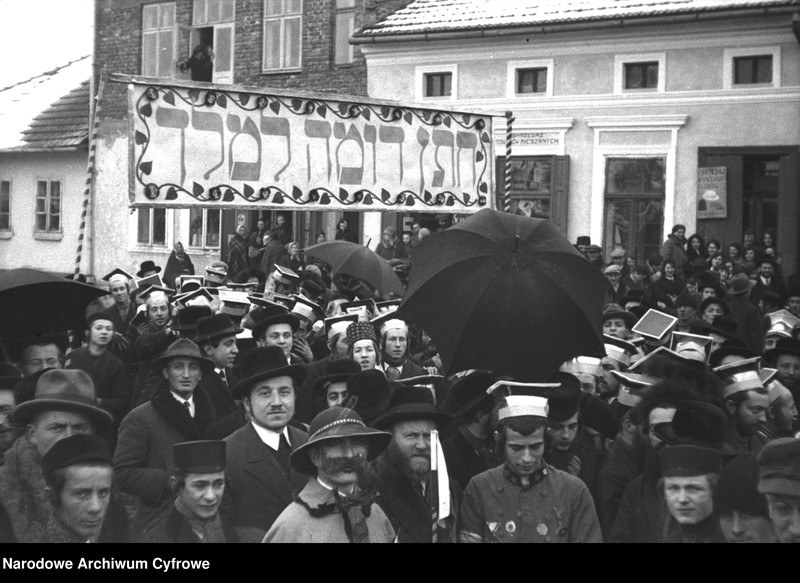
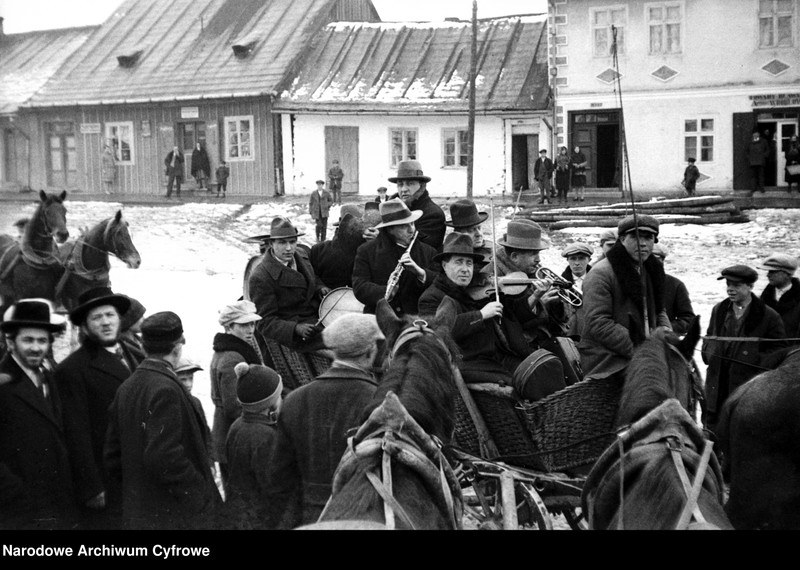
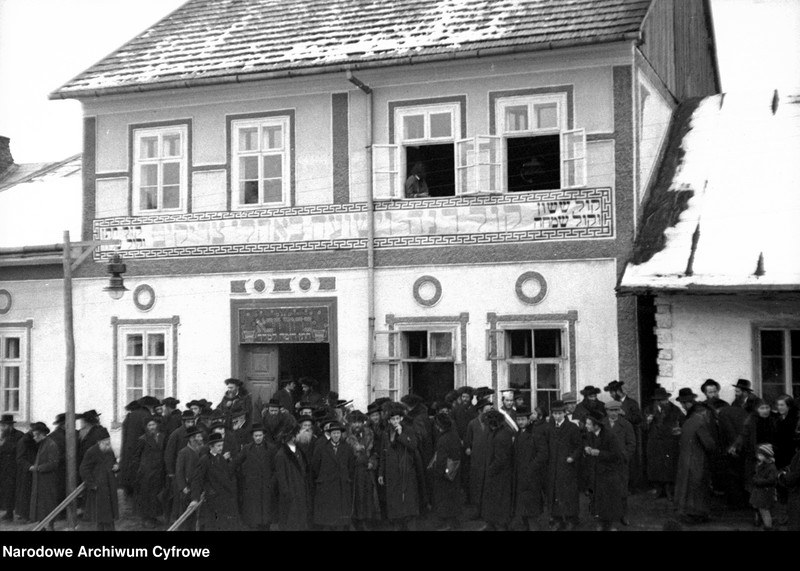
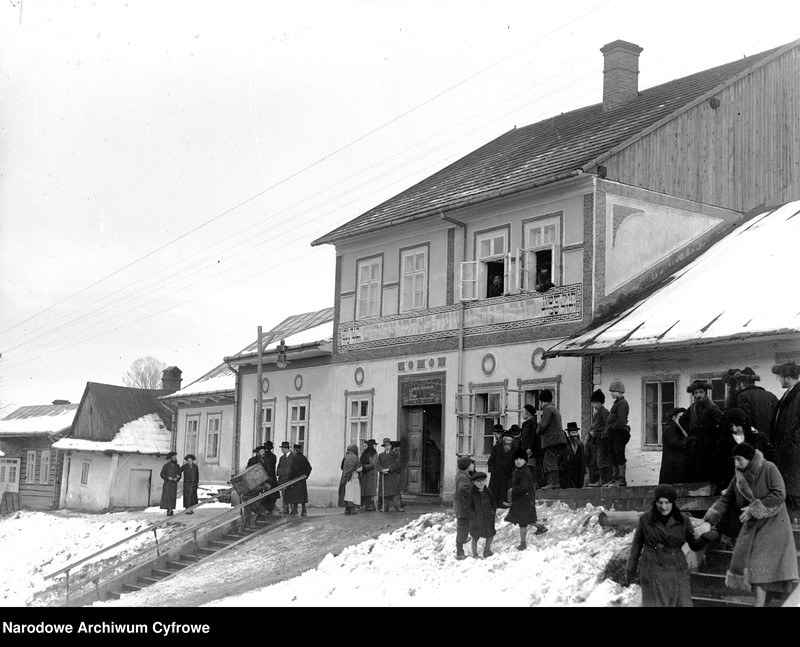
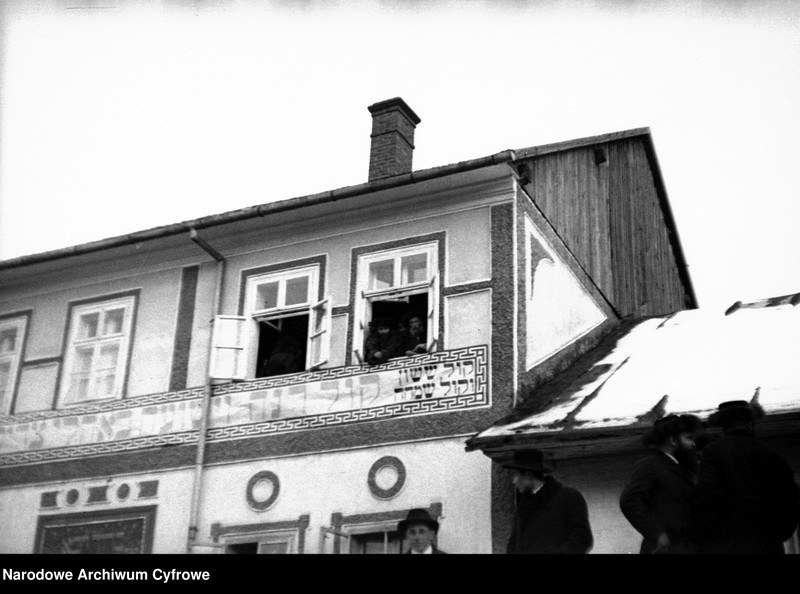
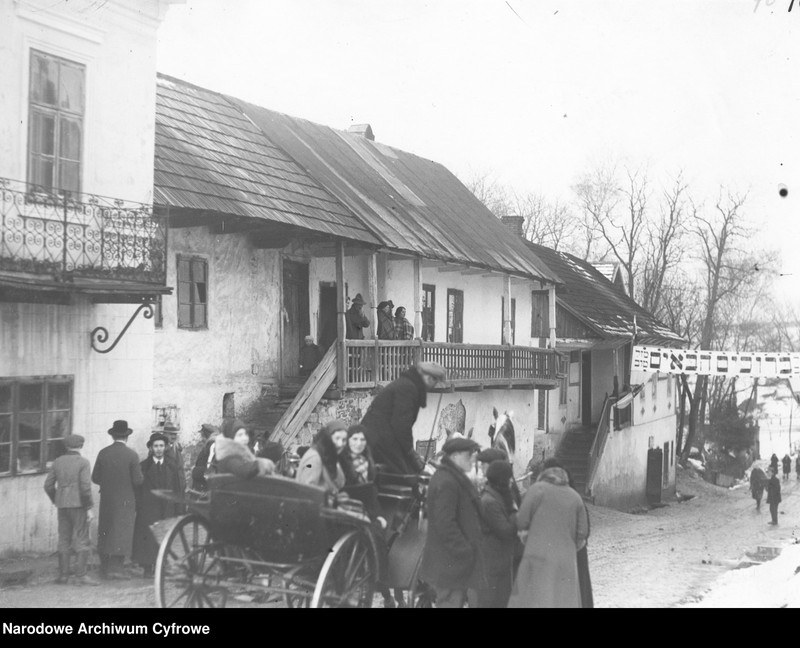
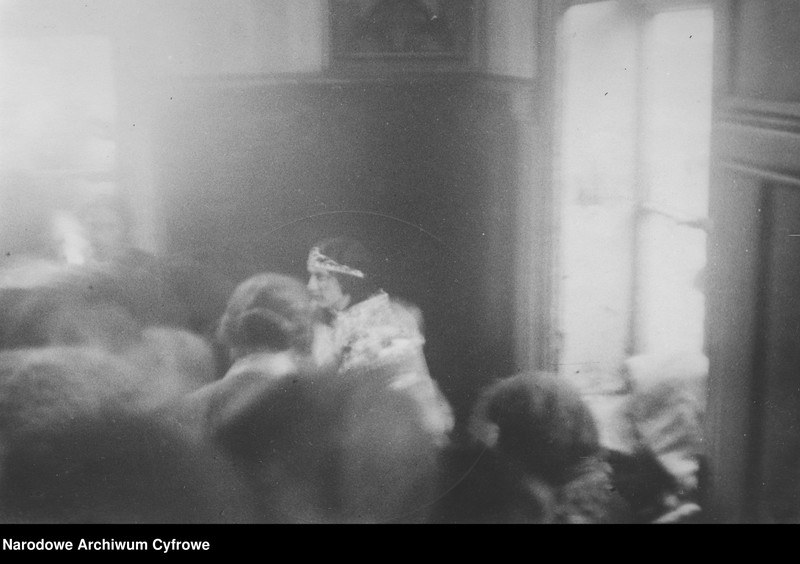
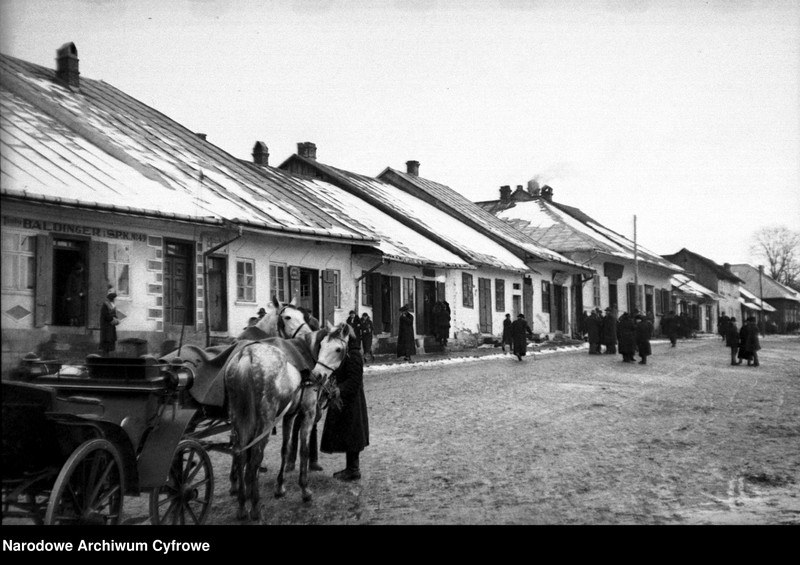
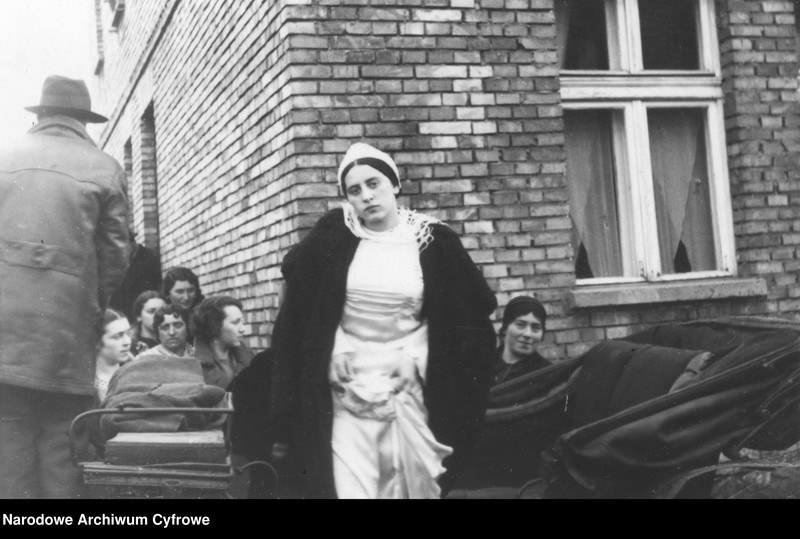
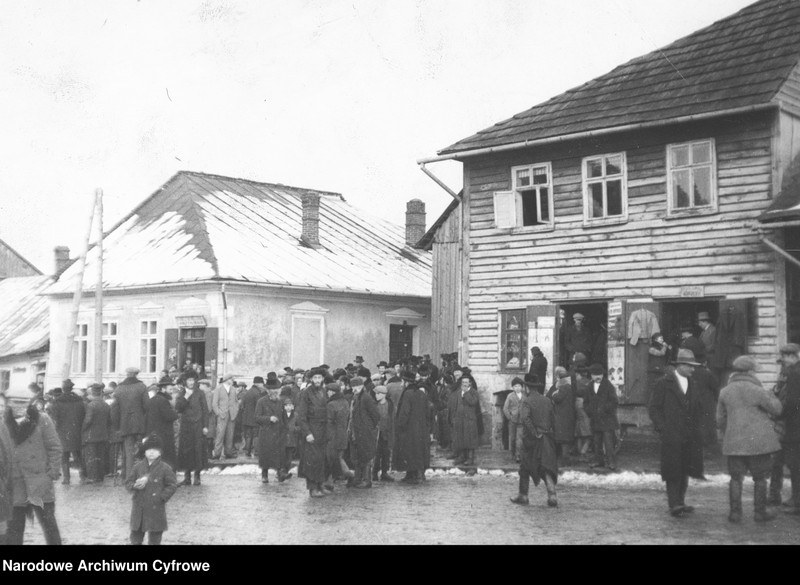
Sixty-two frames from the wedding week in Bobowa, March 1931. Photographed by Ze’ev Aleksandrowicz for the Kraków illustrated press.
The Rebbe on the platform
At one in the afternoon on Tuesday, 10 March 1931, the groom’s special from Kraków pulled into Bobowa. Men in long coats and shtreimels pressed forward. Passengers leaned from the car windows. Grain flew toward the train. In the thick of that greeting stood the Bobover Rebbe, Reb Ben Zion Halberstam, meeting his son-in-law on the platform before the procession formed for town.
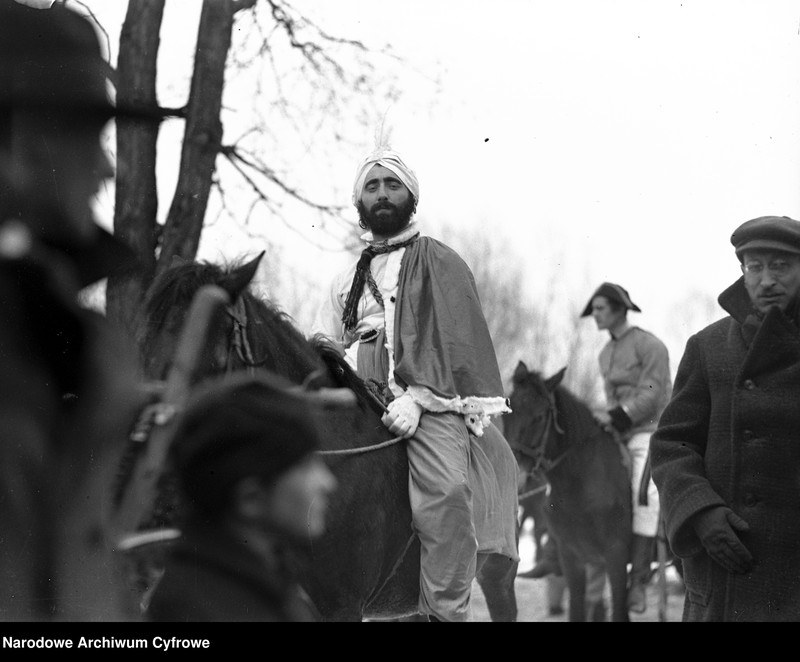
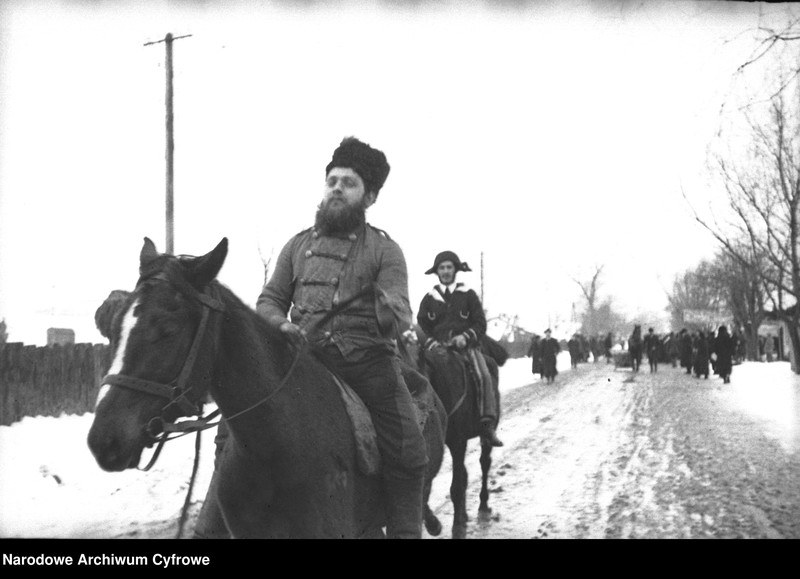
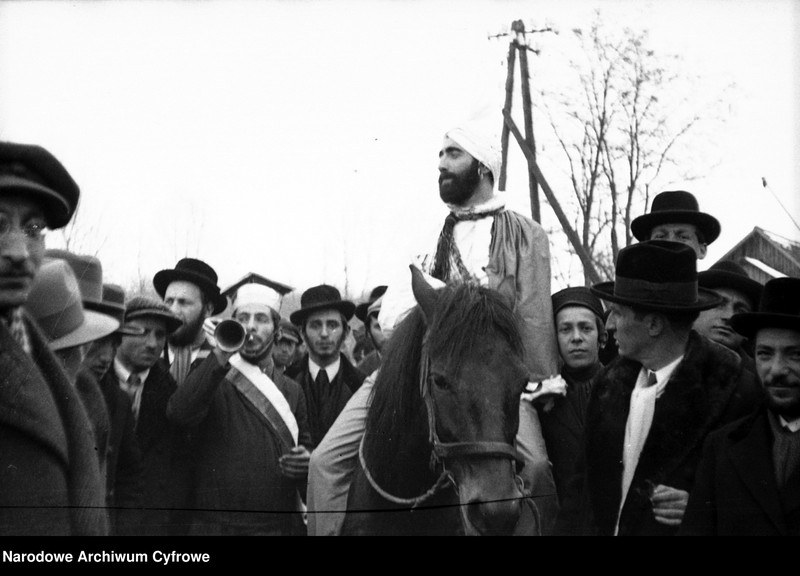
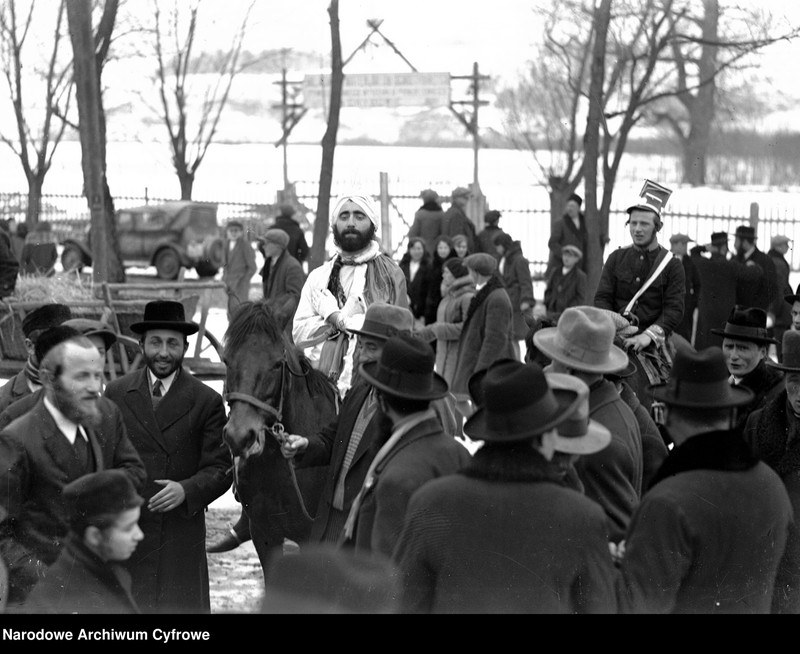
The chasunah was his daughter Nechama Golda Halberstam’s marriage to Mojżesz Stempel of Kraków. Guests had been pouring in since Sunday on the regular trains, and more came on foot and by cart. Before the special arrived, the approach to the station was already in costume: Cossacks, Kraków peasants, lancers, and hussars, so it would be merry and feel like Purim, with whole ranks of highlanders, cavalrymen, and guardsmen milling before the station house.
Ze’ev Aleksandrowicz’s camera caught the greeting, the parade into town, and scenes from the wedding week.
The kallah
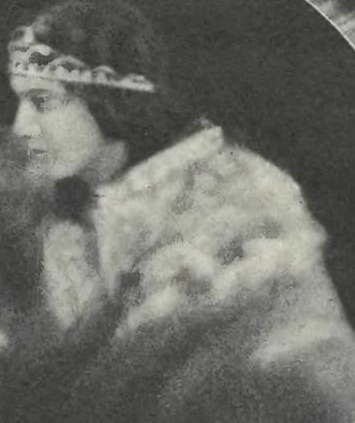
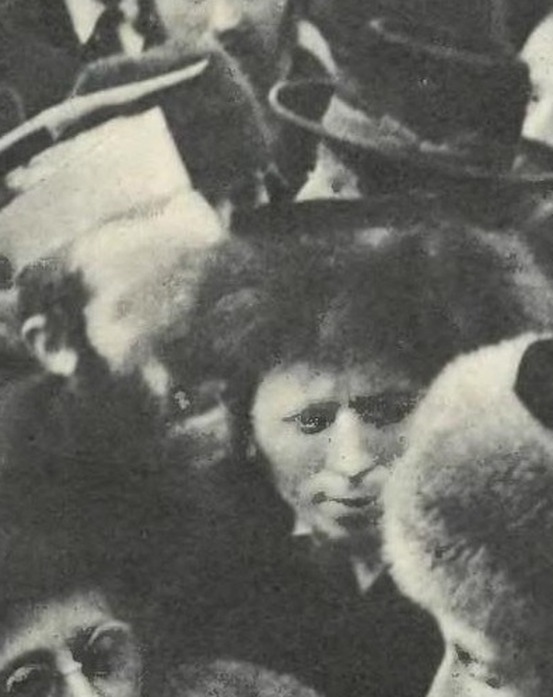
Kraków’s illustrated weekly Światowid printed Nechama Golda Halberstam in her wedding dress and Mojżesz Stempel at Bobowa railway station beside Reb Ben Zion Halberstam.
Not Hana
Genealogies and later Bobov family lists give the bride as Nechama Golda (also spelled Nehama Gołda or Nechema Golda), and those close to her called her Chumcia, a pet form of Nechama.
In March 1931 Jan Lankau’s report in Światowid got the name wrong and called her Hana: the Bobover Rebbe, he wrote, was marrying off “swą córkę Hanę” (“his daughter Hana”) to the talmudist Mojżesz Stempel. Later Polish articles that reprint Lankau gloss that as Chana. Her name was Nechama Golda, not Hana or Chana.
From the special to the seudah
The groom was a Kraków talmid, son of Feivish Stempel, a Bobover chassid and vice-president of Kraków’s Jewish Community Council. The special from Kraków that pulled in at one o’clock brought crowds of the Rebbe’s followers and other guests, with the mechutanim and a thick crowd of chassidim aboard.
Reb Ben Zion Halberstam led his son-in-law to a carriage, and the procession formed. At the head marched about a hundred and fifty yeshivah bochurim dressed as “military,” then an orchestra playing the Bobover Rebbe’s own march. Horsemen in Cossack dress, some of it sewn for the day and some borrowed from museums, rode with them, along with the mounted escort and costumed foot contingent that had been waiting at the station.
The groom sat in a decorated carriage in a satin kalpak (tall fur hat), a son of the Rebbe on one side. Warsaw’s Yiddish daily Der Moment says the groom’s brother, a university student, sat on the other. Behind them came the mechutanim, then a crowd stretched out more than two kilometers, singing and cheering. The Bobov court put up everyone who came.
A man in Kraków folk dress and a peacock-feather cap had stopped cars before the train arrived and directed reporters to the platform: the Rebbe was coming to greet his son-in-law. In town another orchestra and more of the bochurim “military” were waiting, and domestic and foreign reporters and photographers worked the crowd. A Hebrew banner at the head of the procession read “Blessed is he who comes.”
The chuppah was that evening on the marketplace by the shul, roofs packed with onlookers. The Krasner rav was mesader. Reb Shloyme’le, a son of the Bobover Rebbe, and Feivish Stempel were underführers (the escorts who walked them to the chuppah). The Bobover Rebbe gave the brachah amid open weeping.
The seudah opened around seven in the Rebbe’s beis midrash. At the head table sat the groom, the Bobover Rebbe, and Reb Shalom Eliezer’l of the Sanzer line, with the Krasner, Skaviner, Limanower, Sanoker, and Rudniker rabbonim among the Galician guests; across from them sat Feivish Stempel and the more modern mechutanim. Badchonim worked the room, Kraków’s Ratmanski at their head. After bentshing the mitzvah-tanz ran hot with tears, and Reb Shalom Eliezer’l danced first with the kallah. Several hundred sat the feast. The meal broke up around seven in the morning.
Bobowa station
Bobowa railway station
Bobowa, near Gorlice, southern Poland
49.7165, 20.9566
Street View near Bobowa station today, looking toward the tracks where the groom’s train was met in 1931. Open in Google Maps.
On the wires from Bobowa
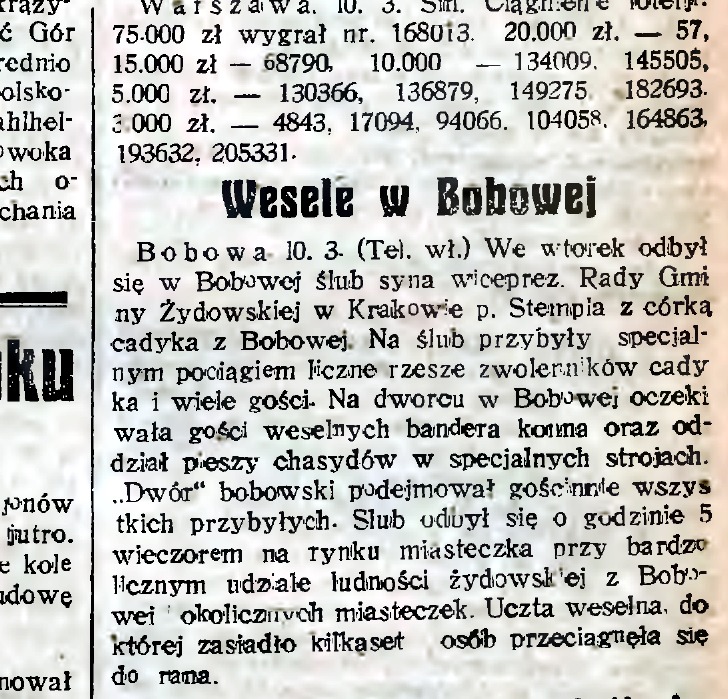
Two days later Kraków’s Jewish daily Nowy Dziennik printed a phone report from Bobowa, dated 10 March:
“Wedding in Bobowa. Bobowa, 10 March (by phone). On Tuesday in Bobowa, the son of Mr. Stempel, vice-president of Kraków’s Jewish Community Council, married the daughter of the Bobowa rebbe. A special train brought crowds of the rebbe’s followers and many other guests. At the Bobowa station a mounted escort and a foot unit of chassidim in costume were waiting for them. The Bobowa court put up everyone who came. The wedding was at five in the evening on the town marketplace, with a huge turnout of Jews from Bobowa and the nearby towns. Several hundred sat down to the wedding feast, and it ran until morning.”
Six thousand in the caption
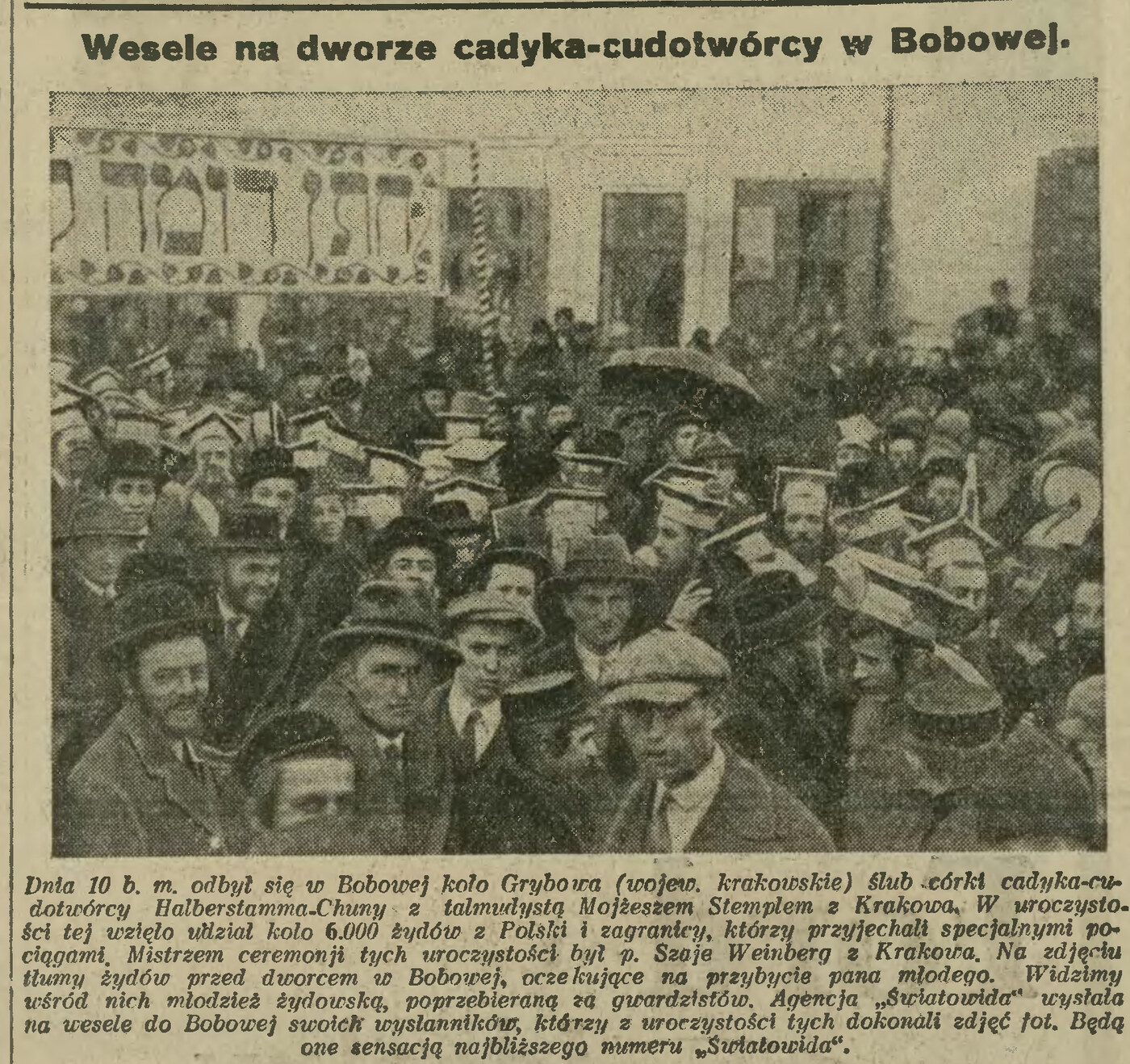
On 13 March 1931, issue 72 of Kraków’s illustrated daily Ilustrowany Kuryer Codzienny ran a station photograph with this caption:
“Wedding at the court of the wonder-working rebbe in Bobowa. On the 10th of this month in Bobowa near Grybów (Kraków province), the daughter of the wonder-working rebbe Halberstamm-Chuny married the Kraków talmudist Mojżesz Stempel. About six thousand Jews from Poland and abroad came for it, on special trains. Mr. Szaje Weinberg of Kraków ran the ceremonies. The photo shows the crowds of Jews in front of the Bobowa station waiting for the groom. Among them you can see Jewish young men dressed as guards. The Światowid agency sent its people to Bobowa; they photographed the wedding, and the pictures will be the sensation of the next issue of Światowid.”
Lankau among the chassidim
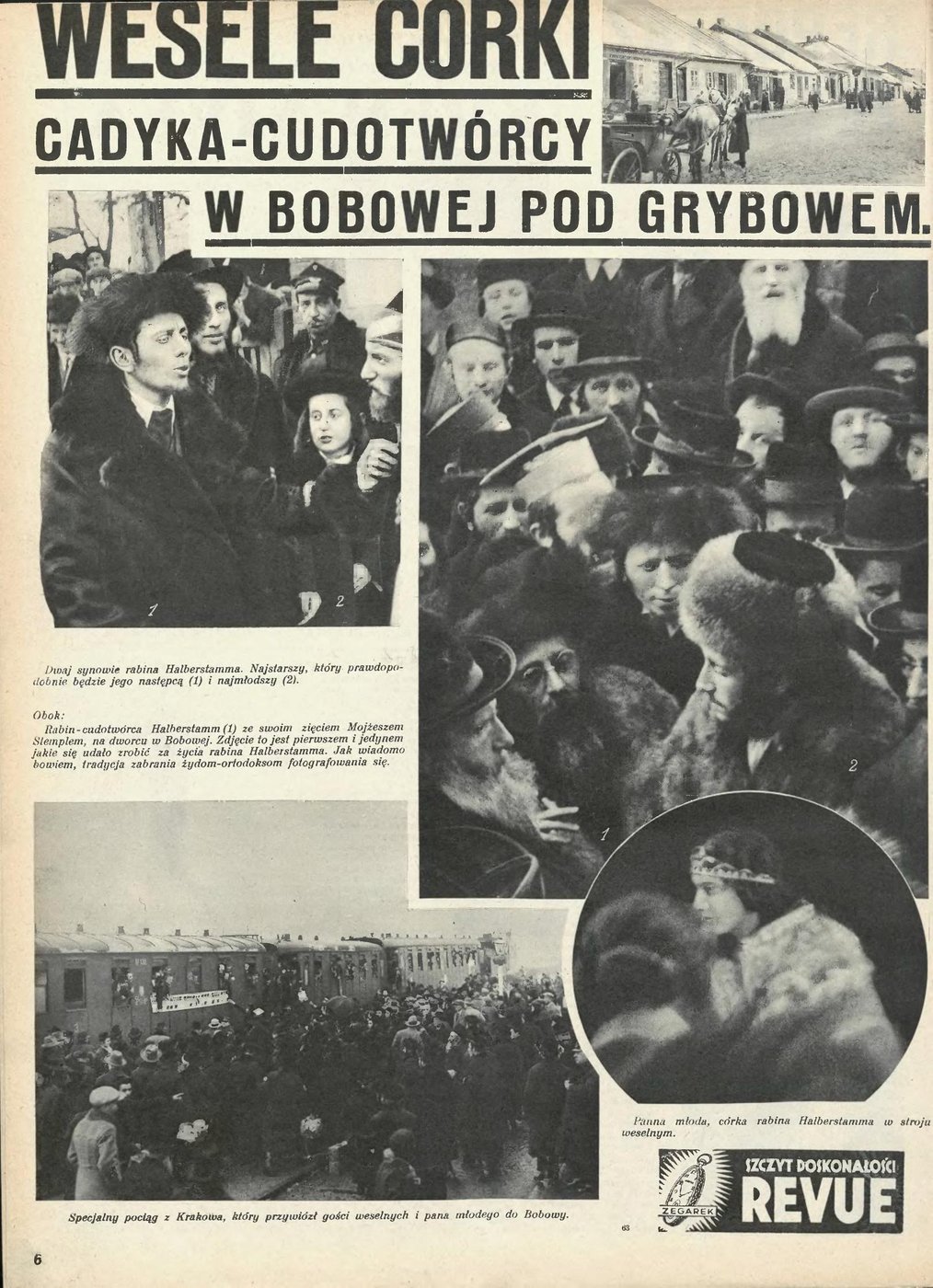
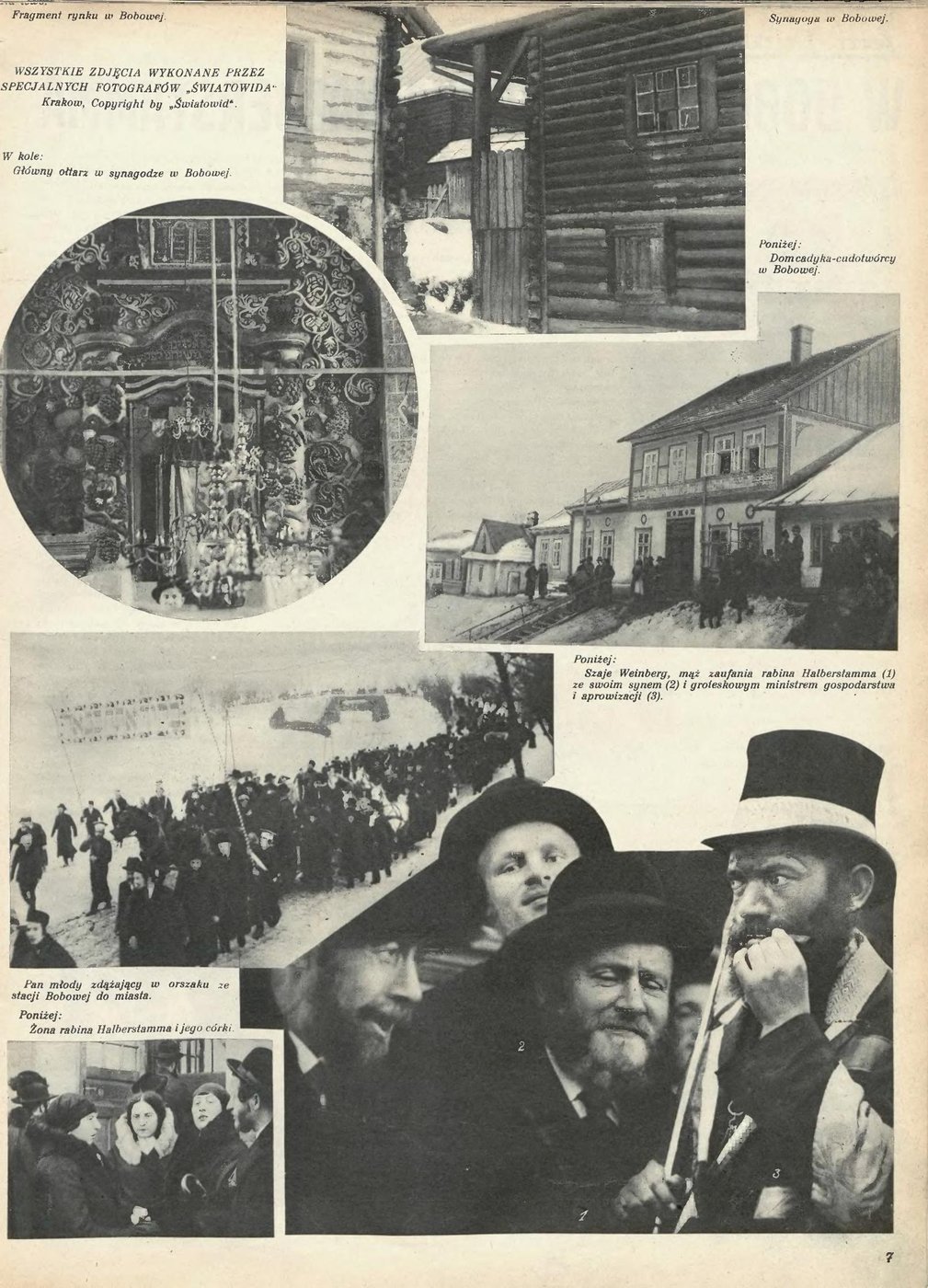
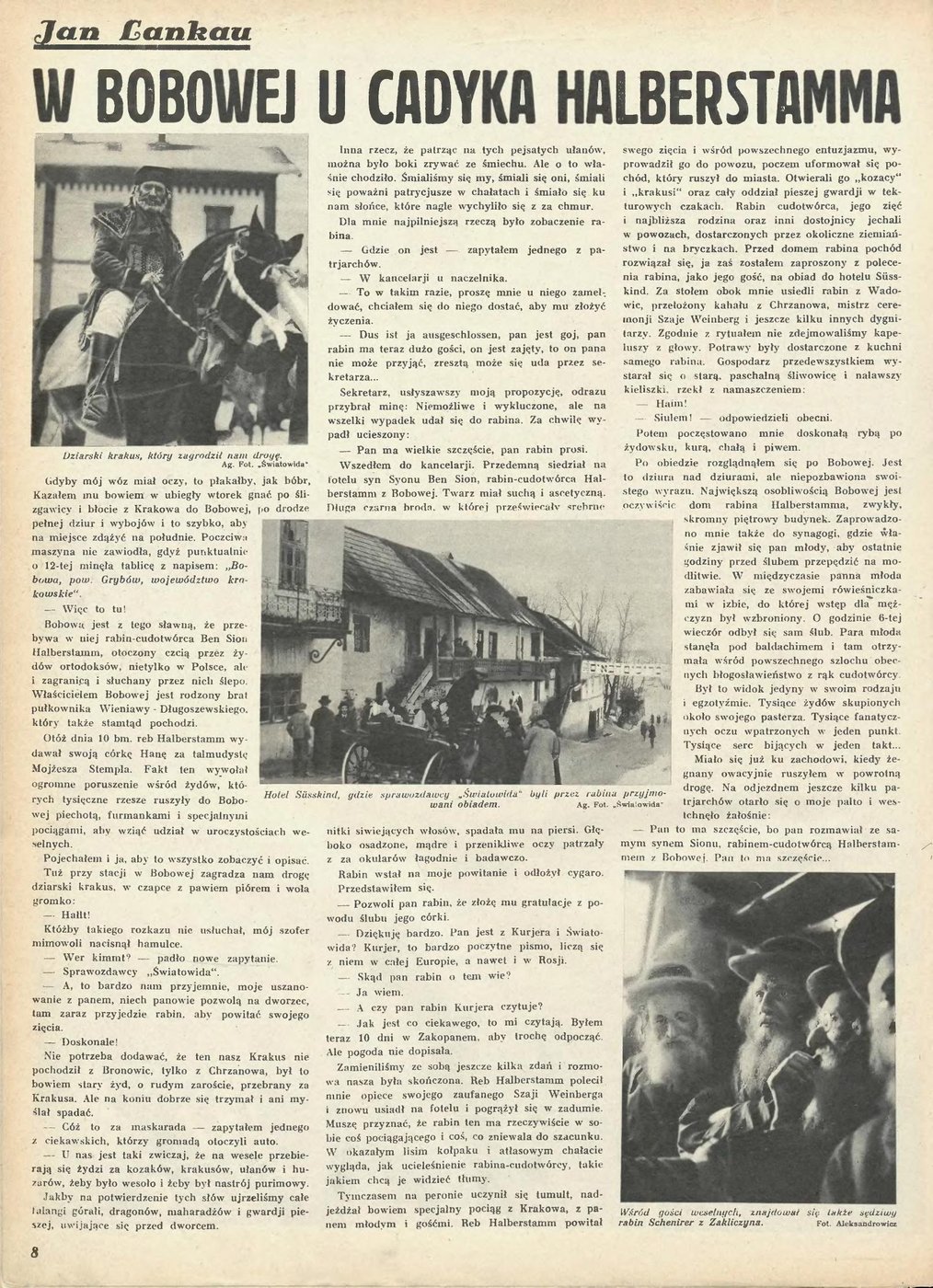
Jan Lankau filed the long eyewitness piece for Światowid, issue 12/1931 (21 March 1931):
“If my car had eyes, it would cry like a beaver. Last Tuesday I sent it racing over ice and mud from Kraków to Bobowa, on a road full of holes and ruts, and fast, so we would be there by noon. The machine held up: at twelve sharp it passed the sign, ‘Bobowa, Grybów district, Kraków province.’
“So this is it!
“Bobowa is famous because the wonder-working rabbi Ben Sion Halberstamm lives there, held in awe by Orthodox Jews in Poland and abroad, and obeyed by them without question. The landowner of Bobowa is the brother of Colonel Wieniawa-Długoszewski, who also comes from there.
“On the 10th of this month Reb Halberstamm was marrying off his daughter Hana to the talmudist Mojżesz Stempel. That set the Jewish world buzzing. Thousands headed for Bobowa on foot, by cart, and on special trains to be at the wedding. I went too, to see it and write it up.
“Right by the Bobowa station a sharp Kraków peasant in a peacock-feather cap blocks our way and shouts, ‘Halt!’ Who argues with that? My driver hit the brakes. ‘Wer kimmt?’ ‘Correspondents from Światowid.’ ‘Ah, a pleasure, gentlemen; please come onto the platform; the rabbi will be here soon to greet his son-in-law.’ ‘Excellent!’
“Of course our Kraków peasant was not from Bronowice. He was an old Jew with a red beard from Chrzanów, dressed for the part. But he sat the horse well and showed no sign of falling off. ‘What’s with the costumes?’ I asked someone in the crowd around the car. ‘For a wedding here, Jews dress as Cossacks, Kraków peasants, uhlans, and hussars, so it will be merry and feel like Purim.’ As if on cue we saw whole ranks of highlanders, dragoons, maharajas, and foot guards milling in front of the station. Looking at those peis-wearing uhlans, you could die laughing. That was the point. We laughed, they laughed, the serious men in long coats laughed, and the sun laughed with us when it finally pushed out from behind the clouds.
“What I wanted most was to see the rabbi. ‘Where is he?’ I asked one of the elders. ‘In the starosta’s office.’ ‘Then please announce me; I wanted to congratulate him.’ ‘Das ist ja ausgeschlossen; you’re a goy; the rabbi has many guests; he’s busy; he can’t receive you; maybe through the secretary…’ The secretary heard me out and put on a face that said impossible, then went in anyway. A moment later he came out beaming: ‘You’re in luck; the rabbi asks for you.’
“I went in. In an armchair sat Ben Sion, the wonder-working rabbi Halberstamm of Bobowa. Dry, ascetic face. A long black beard with silver threads falling on his chest. Deep-set, sharp eyes behind spectacles, mild and searching. He rose to greet me and set aside his cigar. I introduced myself. ‘Rabbi, let me congratulate you on your daughter’s wedding.’ ‘Thank you very much. You’re from the Kurjer and Światowid? The Kurjer is read everywhere in Europe, even in Russia.’ ‘How do you know that, rabbi?’ ‘I know.’ ‘And do you read the Kurjer?’ ‘When there’s something interesting, they read it to me. I was just ten days in Zakopane, to rest a little. The weather didn’t cooperate.’ A few more lines and we were done. Reb Halberstamm handed me to his man Szaje Weinberg, sat back down, and sank into thought. I have to say this rabbi really has something that draws you and commands respect. In a fox shtreimel and a satin robe he looks exactly like the wonder-working rebbe the crowds come to see.
“Then the platform erupted: the special from Kraków was in with the groom and guests. Reb Halberstamm greeted his son-in-law and, amid the cheering, led him to a carriage; a procession formed for town. Cossacks and Kraków peasants opened it, with a whole detachment of foot guards in cardboard shakos. The wonder-working rabbi, his son-in-law, the closest family, and other dignitaries rode in carriages lent by local landowners and on britzkas. At the rabbi’s house the procession broke up, and on his orders I was invited as his guest to dinner at the Hotel Süsskind. At my table sat the rabbi of Wadowice, the head of the Chrzanów kahal, master of ceremonies Szaje Weinberg, and a few other dignitaries. Per the custom we kept our hats on. The food came from the rabbi’s own kitchen. The host first brought out an old Passover slivovitz, filled the glasses, and said solemnly, ‘Lechaim!’ ‘Sholem!’ answered the table. Then excellent fish Jewish-style, chicken, challah, and beer.
“After dinner I walked Bobowa. Hole after hole, but with its own character. The main sight is the house of Rabbi Halberstamm, an ordinary modest two-story building. They also took me to the synagogue, where the groom had just gone to spend the last hours before the wedding in prayer. Meanwhile the bride was with her companions in a room closed to men. At six in the evening the wedding itself: the couple under the baldachin, and amid general sobbing they received the blessing from the wonder-worker. A sight unlike anything else. Thousands of Jews around their leader. Thousands of eyes fixed on one point. Thousands of hearts beating as one…
“Toward sunset, seen off with cheers, I started back. On the way out a few more elders brushed my coat and sighed, ‘You’re lucky, sir. You spoke with the son of Zion himself, the wonder-working rabbi Halberstamm of Bobowa. You’re lucky…’”
A caption on the same pages also names among the wedding guests “the aged Rabbi Schenirer of Zakliczyn.”
The great wedding at the Bobover court
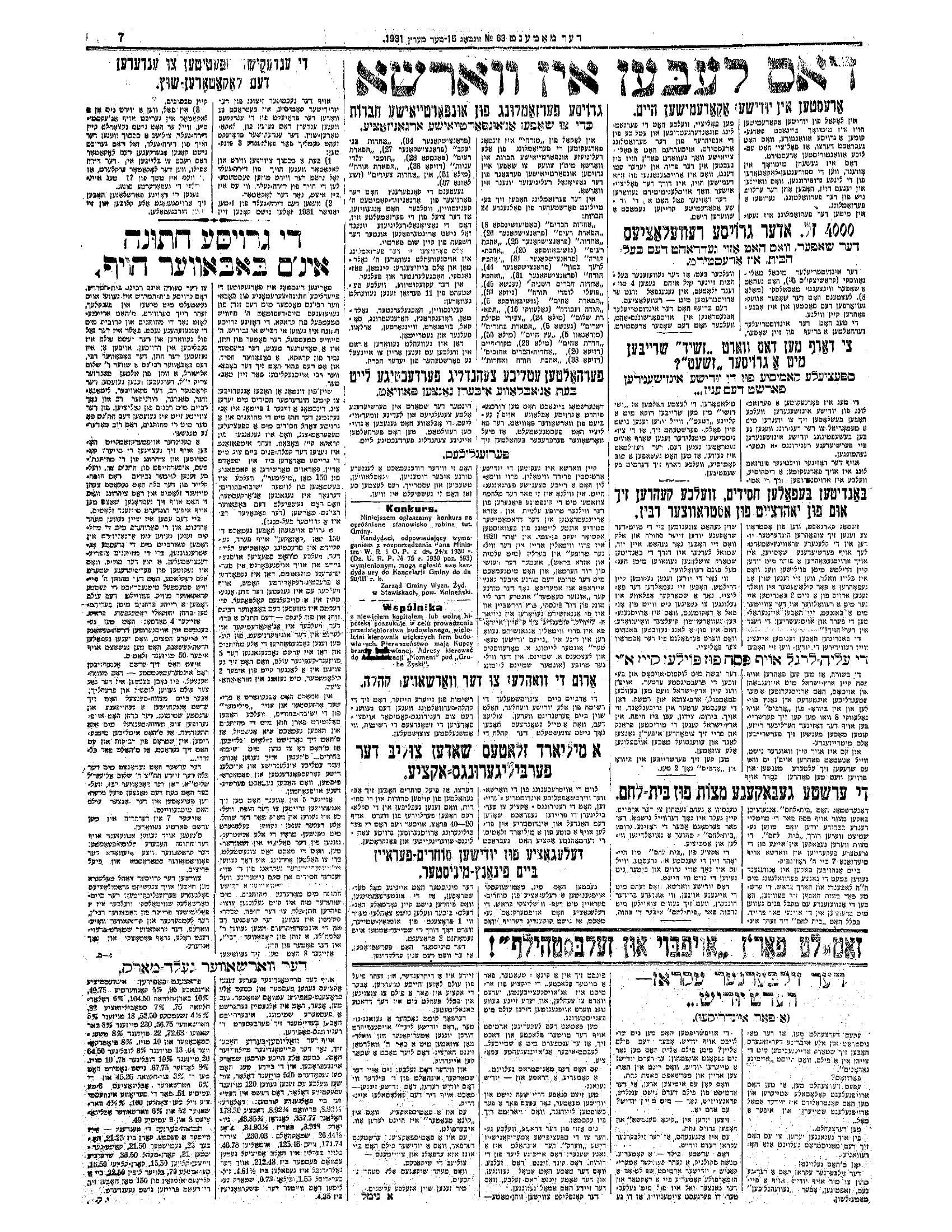
Warsaw’s Yiddish daily Der Moment (דער מאמענט), 15 March 1931, p. 7:
“On Tuesday the Bobover Rebbe’s daughter married the son of former Sejm deputy Feivish Stempel of Kraków. It was a big wedding on both counts: rabbinic and rich. Feivish Stempel, the groom’s father, is a modern man, Kraków’s richest, a Bobover chassid, and the bachur the Bobover Rebbe chose for his daughter.
“From Sunday on, hundreds of chassidim came in on every train. Tuesday at one in the afternoon the groom arrived with the mechutanim and a large crowd of chassidim on a special from Kraków to Bobowa. The greeting at the station, and the parade into town, were something to see. Up front marched about a hundred and fifty ‘soldiers,’ all yeshivah bachurim; then an orchestra playing the Bobover Rebbe’s march (he is a serious musician). The horsemen in Cossack dress were a real sensation: some of the outfits were sewn for the day, some borrowed from museums. Then came a decorated carriage with the groom in a satin kalpak. On his right sat a son of the Bobover Rebbe; on his left, the groom’s brother, a university student. Behind them rode the mechutanim, and only then the huge crowd, stretched more than two kilometers, singing and cheering.
“In town another orchestra and more of the bachurim ‘military’ were waiting; they had already played for the groom and mechutanim and even held an inspection. You would not have guessed they were yeshivah bachurim. Local and foreign reporters and photographers were there shooting pictures. At five in the evening people started getting ready for the chuppah on the marketplace in front of the shul. Every roof was packed. Police and gendarmes did what they could, but thousands of chassidim and ordinary onlookers still crushed in to see a wedding with mechutanim like these. It was barely possible to get the bride and groom under the chuppah. The Krasner rav was mesader; the underführers were Reb Shloyme’le, a son of the Bobover Rebbe, and the groom’s father.
“At seven they washed for the seudah in the Rebbe’s beis midrash. The big beis midrash was set with tables and benches and served very richly. Only mechutanim, relatives, and invited guests got in; it filled up fast, and everyone else stayed outside. At the head sat the groom, the Bobover Rebbe, and a father-in-law of the Bobover Rebbe, Reb Shalom Eliezer’l, a son of the old Sanzer rebbe, z”l. Beside them sat the Krasner rav, the Skaviner, the Limanower, the Sanoker, the Rudniker rav, and other rebbes and rabbonim from Galicia. Across the way sat the groom’s father with the mechutanim, most of them modern people. People also talked about the costly presents and jewelry; the bride’s dress alone, they said, ran to ten thousand złoty with its adornment, and the rest of the gifts to over a hundred thousand.
“There was more than enough food, and the best of it, so the mechutanim would be happy. Music had come from various cities, and Feivish Stempel had also brought Kraków musicians. Badchonim kept the room going, with the famous Kraków badchan Ratmanski at their head. After bentshing the mood turned serious; the badchan called the mitzvah-tanz with such heat that it took people’s breath away, storms of deveikus and tears, almost like Kol Nidrei. First to dance with the kallah was the shver, the holy rebbe Reb Shalom Eliezer’l, shlita; then a son of the Bobover Rebbe. Plenty of tears during the dancing, and the whole crowd wept with them. The meal finally ended at seven in the morning. Higher officials were also there: Kraków’s vice-president, the starosta, and many Polish landowners.”
Aleksandrowicz’s lens
Ze’ev (Wilhelm) Aleksandrowicz, a Kraków photographer for the illustrated papers, shot the wedding, and his later portfolio still lists the Bobova 1931 work.
The photographs and what followed
Bobover Rebbe Reb Ben Zion Halberstam was murdered in Lwów in 1941, and after the war Bobov continued in the United States under his son, Reb Shlomo Halberstam.
Timeline
- 1874
- Reb Ben Zion Halberstam born; later Bobover Rebbe.
- 1905
- He assumes leadership of Bobov.
- 10 March 1931
- Nechama Golda Halberstam marries Mojżesz Stempel in Bobowa; the town greets the groom at the station.
- 12 March 1931
- Kraków’s Jewish daily Nowy Dziennik prints “Wesele w Bobowej” (“Wedding in Bobowa”), a phone report from Bobowa dated 10 March.
- 13 March 1931
- Kraków’s illustrated daily Ilustrowany Kuryer Codzienny (issue 72) prints a Bobowa wedding photo caption, naming Mojżesz Stempel, about six thousand guests, and Szaje Weinberg, and crediting Agencja „Światowida” (the photo agency of the illustrated weekly Światowid).
- 15 March 1931
- Warsaw’s Yiddish daily Der Moment prints “די גרויסע חתונה אינ'ם באבאווער הויף” (“The great wedding at the Bobover court”), naming Feivish Stempel and describing the special train, costume parade, chuppah, and feast.
- March 1931
- Kraków’s illustrated weekly Światowid prints Lankau’s report and Aleksandrowicz’s Bobowa photographs.
- 1941
- Bobover Rebbe Reb Ben Zion Halberstam is murdered in Lwów.
- 1945
- Bobov rebuilds in the United States under Reb Shlomo Halberstam.