Eight Jewish Soldiers Take Their Oath
At Kalemegdan Fortress in Belgrade, eight Jewish recruits take their military oath before the country’s chief rabbi.
"Zakletva regruta Vardarskog puka" (Oath of the Recruits of the Vardar Regiment), credited to Đoka Bogdanović, April 1914. Preserved and published by the Jugoslovenska kinoteka (Yugoslav Film Archive). The player starts at the Jewish oath.
Eight men and a rav
Spring 1914, Belgrade, months before the world war. On the Lower Town parade ground at Kalemegdan Fortress, recruits of Serbia’s Vardar Regiment step forward to swear. They come from lands Serbia had just taken in the Balkan Wars. The Crown Prince, the prime minister, officers, and a crowd Belgrade’s morning paper Politika put at more than 15,000 look on.
Most of the regiment is sworn by Serbian Orthodox military clergy. Then the camera finds a smaller knot of men: eight Jewish soldiers, set apart for an oath according to their own faith. The man administering it is the country’s chief rabbi.
What Politika printed the next morning
Politika named both the count and the rabbi:
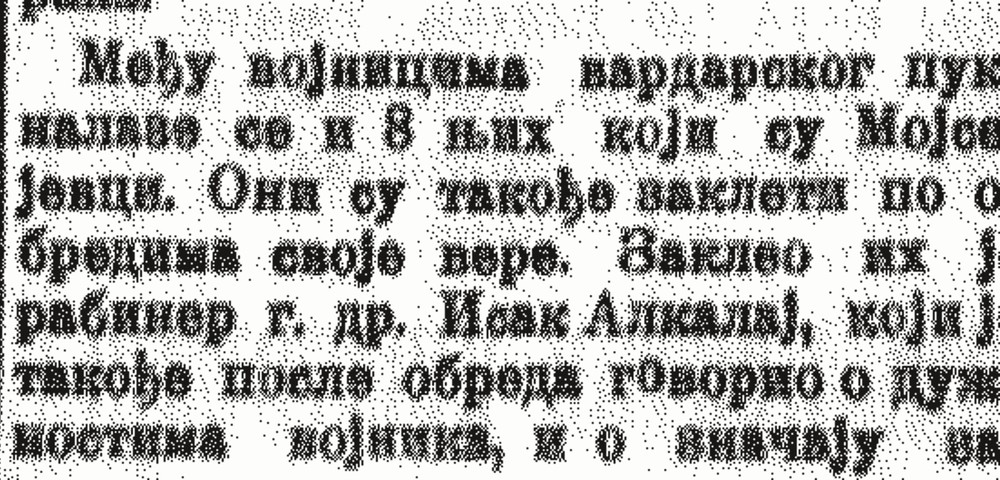
„Међу војницима вардарског пука налазе се и 8 њих који су Мојсејевци. Они су такође заклети по обредима своје вере. Заклео их је рабинер г. др. Исак Алкалај, који је такође после обреда говорио о дужностима војника, и о значају заклетве.“
“Among the soldiers of the Vardar Regiment there are also 8 of them who are of the Mosaic faith. They too were sworn in according to the rites of their own faith. They were sworn in by Rabbi Dr. Isak Alkalaj, who also spoke, after the rite, about the duties of a soldier and about the meaning of the oath.”
The surviving footage is silent, so Rabbi Alkalai’s speech is known from that report, not from the reel.
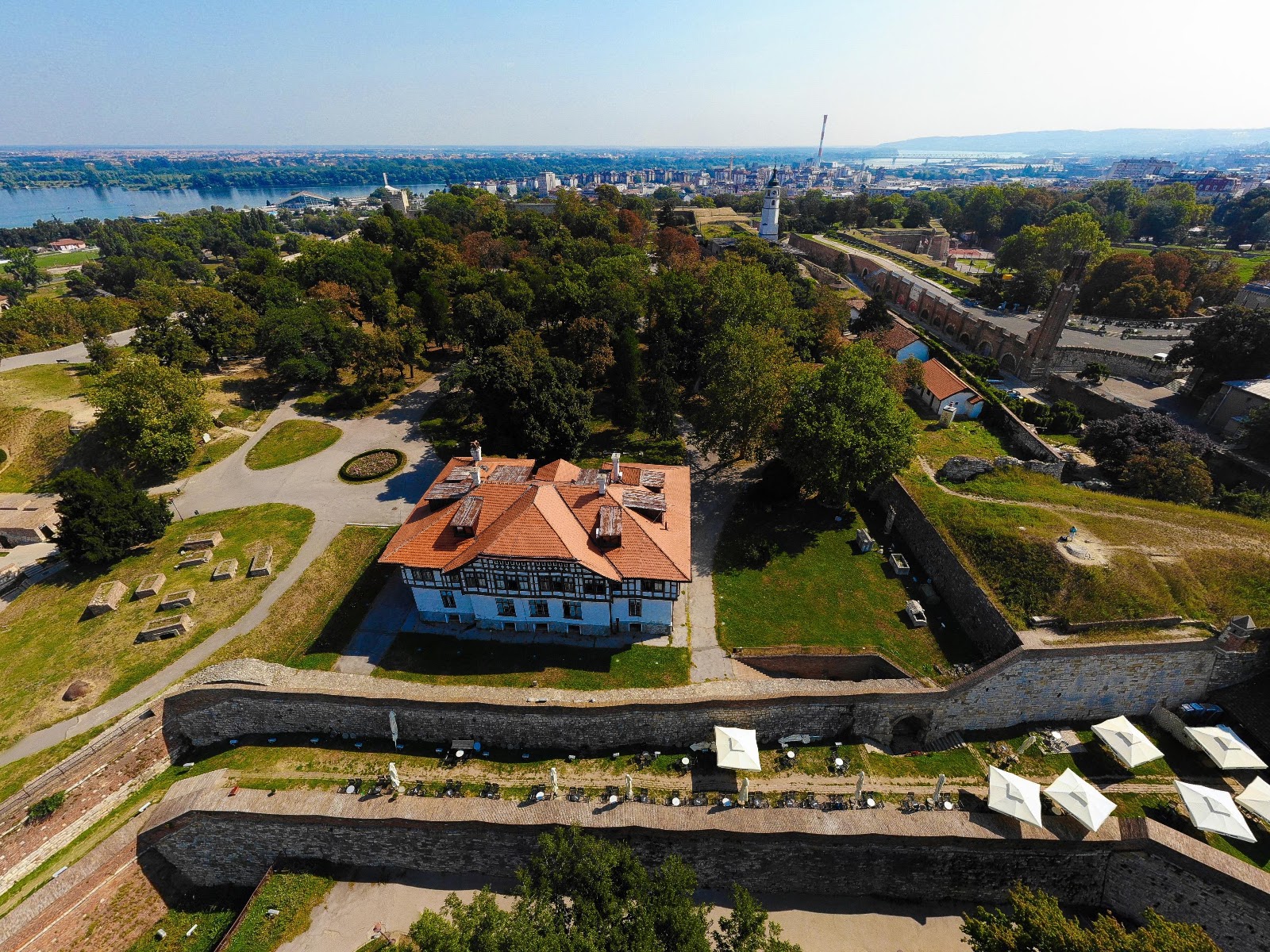
Kalemegdan
Kalemegdan Fortress Lower Town, Belgrade
44.8224386, 20.4483489
Sunday on two calendars
Serbia still used the Julian calendar in 1914. The film archive’s April 13 is Old Style (Julian calendar). On today’s calendar that Sunday is April 26 Gregorian (today’s calendar).
Confirm it with Politika no. 3682, dated Monday, April 14, 1914 Old Style. Its page-two report, “Ceremony in the Fortress: The Oath of Soldiers from the Vardar Regiment,” says the event happened “yesterday.” That is Sunday, April 13 Old Style, or Sunday, April 26 Gregorian.
The same report calls the Vardar Regiment recruits from the “new territories,” and confirms the crowd, the fortress, and the Crown Prince. April 26, 1914 corresponded to 30 Nisan 5674, not 17 Nisan (the date you get if you misread the Serbian calendar as Gregorian).
Rabbi Isaac Alkalai
The rav administering the oath was Rabbi Isaac Alkalai, in his early thirties on that parade ground. He had been born in Sofia in 1881, studied at the Vienna rabbinical seminary, and became chief rabbi of Belgrade and Serbia in 1909. Eight months earlier he had greeted Crown Prince Alexander, who stands again at the Vardar oath.
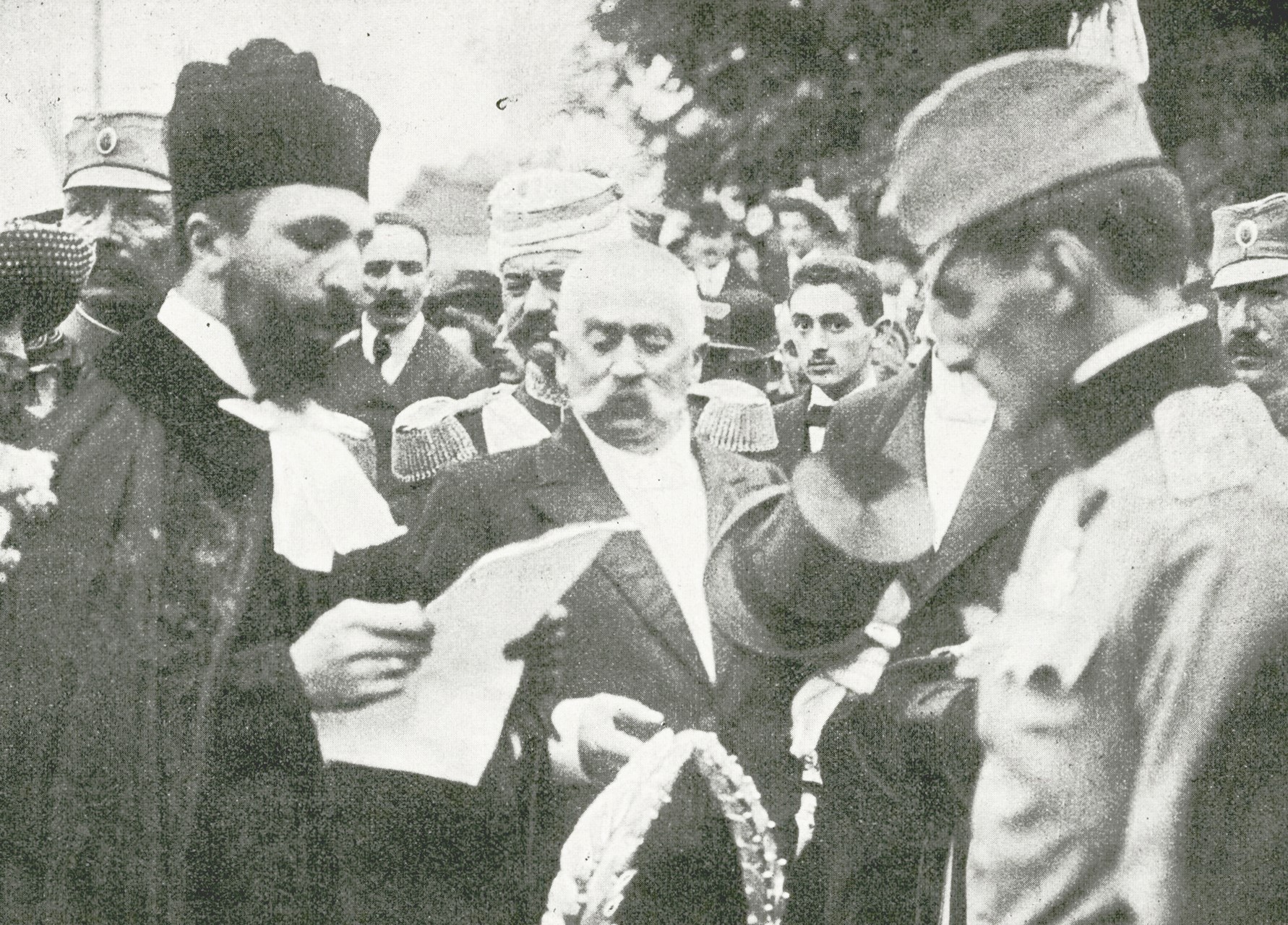
Same day, different camera: a clip from Đoka Bogdanović's "Povratak srpskih pobednika" (Return of the Serbian Victors; kinoteka JKBogd-EFG129), covering the Slavija welcome speeches and gift presentations before the parade to Kalemegdan. Cue to 0:36 for Rabbi Alkalai in the crowd during those greetings. The still above is a closer Valić photograph of his greeting that day.
The film and what followed
The Yugoslav Film Archive credits the film to Đoka Bogdanović. Less than three months later Archduke Franz Ferdinand was assassinated in Sarajevo, and by the end of July Serbia and Austria-Hungary were at war. Many of the men sworn that morning would go into that fight.
Rabbi Alkalai later became chief rabbi of Yugoslavia and sat in the Yugoslav Senate. After the German occupation in 1941 he left for New York and led in the Sephardic community there. He died in Brooklyn in 1978.
Timeline
- 1878
- Serbia internationally recognized; required to guarantee equal civil rights regardless of religion.
- 1881
- Isak Alkalaj born in Sofia.
- 1909
- Rabbi Alkalaj becomes Chief Rabbi of Belgrade and Serbia.
- 1912, 1913
- Balkan Wars; Serbia acquires the “new regions.”
- 13 April 1914 O.S. (Old Style) / 26 April N.S. (New Style)
- Vardar recruits' oath at Kalemegdan; ceremony filmed.
- 28 June 1914
- Assassination of Franz Ferdinand at Sarajevo.
- 28 July 1914
- Austria-Hungary declares war on Serbia.
- 1914, 1918
- Serbian Jewish soldiers, physicians and nurses participate in the war.
- 1918
- Creation of the South Slavic kingdom.
- 1927
- Monument to Jewish soldiers unveiled in Belgrade's Sephardic Cemetery.
- 1941, 1942
- Destruction of most of Belgrade's Jewish community.
- 1978
- Rabbi Alkalaj dies in New York.