
Rabbi Sivitz in a Family Home Movie, Pittsburgh, 1921
Rabbi Moshe Shimon Sivitz stands behind a young man asleep on a Schenley Park bench, then poses with his family, in a family home movie filmed in Pittsburgh on 15 August 1921.
Published
Each story begins with film, a photograph, or an archival clue, then follows the people, place, date, and records.
Rabbi Moshe Shimon Sivitz stands behind a young man asleep on a Schenley Park bench, then poses with his family, in a family home movie filmed in Pittsburgh on 15 August 1921.

At Idlewild Airport, Salomon Singer, in a black hat, stands among the arrivals from a Pan American flight out of Munich.

Satmar chassidim stand at street level by the entrance to Pier 90, looking toward the water as the Queen Mary comes in, waiting for the Satmar Rebbe, Reb Yoel Teitelbaum. Police stand in front of them.

On the Capitol steps, Rabbi Wolf Gold reads into a microphone beside Dr. J.H. Gordon. The unpublished part, from the view down the steps, has never been seen.

Cantor Leib Glantz practices Kol Nidre at the Home of Old Israel. He wears a tallis and a white hat. Men and boys in talleisim sing with him.

In Jerusalem, mourners fill a street and march behind the body of Pinchas Segelov.

A large crowd stands at the Bialystoker doorway, and a man in a tallis stands in the open door. Down at the river, men and women say tashlich on a packed two-level East River pier, 1932.

In Krosno in 1929, a white-bearded rebbe stands in the street with a sefer Torah as the town welcomes the president.

At Vienna’s Talmud Torah on Malzgasse, a bar mitzvah boy puts on tefillin while Rabbi Yeshaya Furst looks on, then the boys sit for an examination and receive rewards.

Two men stand in the Hotel Müller doorway in Kraków, 1936, before Julien Bryan’s camera walks the shops, the market, and a courtyard in Kazimierz.

Boys crowd the camera and laugh as men in black coats walk Warsaw’s Nalewki Street past shops for curtains and hats.

On the steps of Lwów’s main railway station, a Rebbe in a kolpik stands with chassidim.
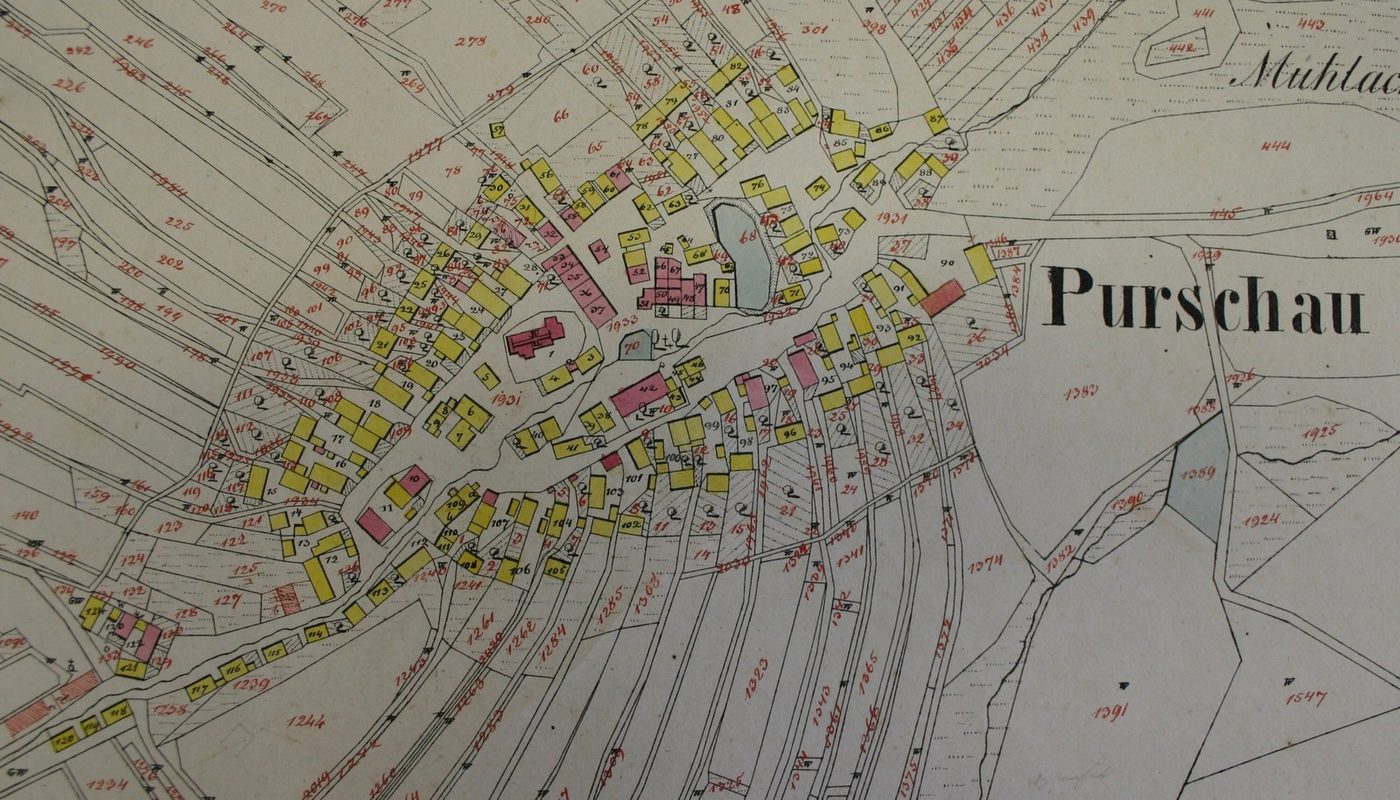
Near Lebanon Lake in Lumberland, a stone wall holds the grave of Nathan Freisleben of Bohemia, who died on 22 December 1851 at age fifty-nine.

From 1926 to 1937, cameras walk Prague’s old Jewish quarter past the Hebrew clock, the Old-New Synagogue, and the cemetery, then in 1946 they film a Torah ceremony inside the Old-New.

French soldiers present arms as Rabbi Jacob Meir, Grand Rabbi (chief rabbi) of Salonika, leaves Allied headquarters in November 1918.

On the Polish steamer Polonia in 1935, the Sochatchover Rebbe, Reb Dovid Bornsztain, walks the deck toward Haifa with Rabbi Yaakov Meir Biderman and Rabbi Yitzchok Meir Levin.

At Bobowa’s railway station in March 1931, chassidim greet the groom’s train, and the Bobover Rebbe, Reb Ben Zion Halberstam, stands on the platform as his daughter Nechama Golda marries Mojżesz Stempel.

On Rosh Hashanah 1922, Pathé filmed packed East End davening in a Mile End cinema: men in talleisim, machzorim open, a baal tokeia sounding the shofar.

At New York’s Hebrew Home for the Aged in January 1932, elderly residents sit at a card table: men in yarmulkes deal and argue while women in headscarves watch from behind.

At a Bronx Jewish nursing home in 1934, Pathé films Samuel Baron’s birthday with cake, a brachah, and “Happy Birthday,” and he tells the interviewer he is 106.

On a Praha-Bubny platform in August 1946, Rebbetzin Recha Sternbuch hands sweets to orphans while Chief Rabbi Yitzchok HaLevi Herzog stands nearby and boys hold Torah scrolls.

At Kalemegdan Fortress in Belgrade, eight Jewish recruits take their military oath before the country’s chief rabbi.